

‘Copperfield has it dead wrong about the dentist model for general practice’
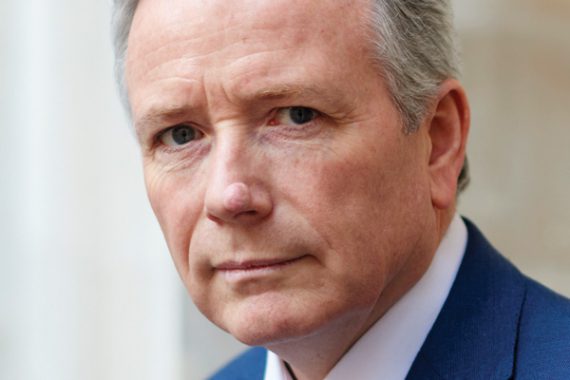


Dr Tom Black argues that recruitment pressures in Northern Ireland and lessons from the Republic of Ireland mean a hybrid model of general practice may be unavoidable
Copperfield got right up my nose with his recent blog ‘Dentist model lacks bite’ about the BMA’s announcement that it will ballot GPs in England with a ‘Plan B’ or hybrid model of general practice.
I write to you from Derry in Northern Ireland, UK – just 400 metres from the border with the Republic of Ireland. Here, we cannot get GP locums or partners because they all work across the border for ‘double the money, half the work’. This has already led to discussions at LMC level about developing a ‘Plan B’ for general practice, as concern over the current model continues to grow.
The recruitment crisis here is now dire because we cannot compete with Sláintecare – the Republic’s major programme of investment in healthcare. Where I’m practising in the west of Northern Ireland, I’ve seen the impact first-hand, with an 18% drop in practice numbers in the last decade.
Half the patients in the Republic of Ireland have free healthcare – like the NHS. 46% of patients then take out private cover and pay about €50 per GP consultation. These patients sit in the same queue at the same local GP practice. It isn’t too dissimilar to the free school meals scheme – where some children pay and others don’t but, in the end, receive the same dinner.
The mixed model also makes general practice a more attractive career. GPs in the Republic earn more and, from what I have heard, patients often have a greater appreciation of the service because they understand its value and cost. An average practice with a hybrid model can earn €30-40k per month extra on top of state funding, while GP partners may earn €200,000-€250,000 a year. This reflects the wider funding model in place.
Because a substantial proportion of patients in the Republic of Ireland contribute directly to the cost of many GP consultations, this may encourage greater self-management and more selective use of primary care services. Recent OECD figures show that life expectancy there is almost two years higher than in the UK, and the WHO shows that there is also a marked difference between Ireland and the UK’s healthy life expectancy.
I cannot solely attribute these outcomes to the result of Ireland’s mixed model. But at the very least it does show that a public-private system can achieve outcomes that outperform those in the UK right now. And so, from where I am standing, hybrid general practice works and is better for both GPs and patients.
In comparison, the NHS is underfunded, understaffed and overwhelmed. Politicians are only interested in providing a ‘pretend GP service’ – one where an AI avatar takes the call, the patient is seen by an HCA or another member of the MDT, and there is a GP somewhere in the background taking responsibility but whom the patient never actually sees. Without an alternative vision from the profession, that model risks becoming the default.
Deprived and vulnerable patients will suffer as a consequence. Those who can afford to will go to separate GP services outside the NHS – probably run by multinationals, much as has happened in the veterinary sector where ownership has increasingly been consolidated by large corporate providers rather than practices remaining owned and run by vets themselves.
‘Invest more funding’ has been the BMA mantra for a generation but my own 30 years as a BMA leader tells me that this isn’t going to happen. Ever. To persist with that strategy is naive, lazy and hypocritical. More crucially it will fail the profession by undermining the autonomy and flexibility that come with the independent contractor status, leaving GPs with ever less say over how care is organised and delivered, while betraying our most vulnerable patients.
The NHS undoubtedly needs more funding, but asking half the population to take out private health insurance to contribute towards their healthcare costs is a form of progressive taxation. Keeping the NHS intact while securing this additional funding stream could prevent a two-tier service from emerging.
English GPs have a phenomenal leader in Katie Bramall, but AI is about to eat GPs’ breakfast; and MDTs will eat our lunch; so, if you want to save your dinner you need to vote for a Plan B/ hybrid model of practice. Better to be part of shaping some sort of solution than to have a third-party model imposed upon you with no say whatsoever. Some might liken it to sitting on your hands and boiling like a frog.
Dr Tom Black is a GP partner in Derry, Northern Ireland, former chair of BMA Northern Ireland, and former chair of BMA Northern Ireland’s GP Committee
Have you got a view you want to share with Pulse?
We’re always open to first-hand pieces and opinions from GPs.
Email your piece for consideration to be published on our site.
Related Articles

READERS' COMMENTS [9]
Please note, only GPs are permitted to add comments to articles







So let me get this right. Charge 50% of the population £50 per consultation that they then claim back from their insurance policy (a policy that has a cost).Let the docs earn 250K and the patients live until 82.9 instead of 80.9 and they all eat the same dinner It’s a win win Tom
Totally agree, I backed this model last year at Glasgow but no appetite from conference. Things have changed, sink or swim, back plan B.
I couldnt agree more. Copperfield was totally wrong on this. NHS general practice must evolve or die!
This article sounds like an argument for Irish reunification perhaps….grass being greener etc.
I can’t see how destroying the NHS constitutional basis of general practice and marketising it will help anybody and actually might be the quickest route to mass unemployment and bankruptcy for the ~30% GP principals…..nobody’ll thank you for that.
It’s the NHS..You know that amazing cost effective, public owned and loved service unrivalled worlwide( look at BMA Doctor magazine commentary if you don’t believe me!) Plans B to Z are for privateers like dentists are now. The dental model gives us a great look at future…appalling care for most who pull out their own teeth and money making procedures for the middle class with add-ons as their insurance doesn’t cover all. I am tired of defending our most important public service from some doctors trained by NHS and who treat just according to clinical need. Do you know what privilege you risk throwing away and losing the respect of our public? If some doctors leave the NHS then the NHS will leave these doctors. Argue for more NHS resources that help patients ( which include doctors!) and get the public on our side again.
Not sure NHS is cost effective .
It is ‘cost cheap’ with a cheap level of service to match ,backed by massive waiting lists, corridor care , reducing percentages of doctor consultations , not fit for purpose infrastructure , demoralised patients and staff , multiple digital and triage patient fobbing off systems, poor cancer performance , poor maternity care , poor other outcomes which could fill this page etc.etc.
Cheap is not the same as cost effective
My wife wants it all to go private cos she reckons I’ll do really well out of it. The people love me and I look good in a suit.
Places such as Hong Kong, Korea, Japan, Taiwan , Singapore can spend less on healthcare than the NHS, but with superior results. Italy spends less than UK but with better results.
Anyone curious how?
Countries that use charges, co-payments are able to spend more and achieve better results than the NHS. Coincidence?
Sorry but i am at a loss here.
Why do people pay £50 when thsy can sit in the same room, see the same doctor and get the same treatment for FREE?