
‘GPs must join the fight to hold Big Tech responsible for robbing childhoods’
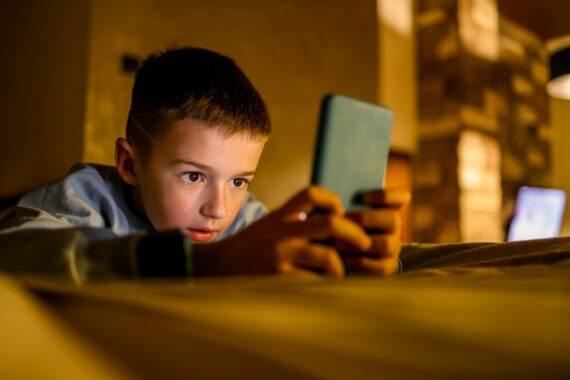


In the same week that Australia bans under-16s from social media platforms, GP and founder of Health Professionals for Safer Screens Dr Becky Foljambe urges GPs to get on board with protecting young people from the perils of Big Tech
Every day, we as GPs are seeing more and more young people struggling with anxiety, sleep problems, and a sense of isolation that is hard to shake. Parents are at their wits’ end, worried about their children’s development and emotional well-being. It is no surprise that so many now talk about their children’s childhoods being ‘robbed’, with hours upon hours lost to the allure of social media platforms and their screens.
In September, the National Education Union (NEU) launched ‘Robbed: Big Tech’s Little Victims’, with the support of a coalition of partners, including ‘Health Professionals for Safer Screens’. This national campaign is calling on the Government to do something vital: raise the age of social media access to 16 and hold social media companies and their billionaire executives responsible for the damage they’re doing to the lives of children and young people.
The numbers are staggering. Paediatric mental health emergencies are up 65%, nearly two million children need speech and language therapy, and there is a myopia epidemic that is set to get worse. These are just some of the alarming statistics that many of us have noticed and are wholly or partly related to excessive use of social media and screens.
The UK is lagging behind other countries which are proactively working to address the ruinous impact of social media use by children and young people. In fact, this week Australia is implementing a ban on under-16s using 10 of the most popular social media platforms to protect young people.
If this had been addressed as a substantial risk earlier, with a robust and wide-reaching public health campaign, perhaps we wouldn’t be in the mess we’re in now. But as it stands, urgent action is needed in all quarters. This must start with government legislation and proper penalties for exploitative Big Tech companies that are found to be in breach.
The likes of Snapchat, TikTok and Instagram have become the glue that keeps children stuck to their screens, often from a shockingly young age. Official guidance from the Government is nowhere to be seen. It’s frustrating to watch the Department of Health and Social Care sit on the sidelines while the problem grows. We, as part of Healthcare Professionals for Safer Screens, feel that both the content and scale of the problem make it a totally unsuitable remit for the Department of Science and Technology to deal with alone.
And it’s not just the physical and mental conditions that screens can generate; there is also real danger. The safeguarding failures are also impossible to ignore. It may be difficult to believe, but current levels mark an 830% increase in online child sexual abuse imagery since the Internet Watch Foundation began proactively hunting child sexual abuse in 2014, and the most common perpetrators are now other children. Shockingly, 13 is the average age at which children first see pornography, and a major study from the Youth Endowment Fund into social media and violence found that the most common form of violence witnessed online is fights involving young people.
A society that is observing such alarming increases in the criminalisation of children should be compelled to act, sit up and listen to Ofsted’s chief inspector, Sir Martyn Oliver, who is calling for bans on smartphones in schools and the National Education Union’s general secretary Daniel Kebede is calling for children under the age of 16 not to be allowed on social media platforms. The most vulnerable children – those with special educational needs, in care, or living in poverty – are at even greater risk, exposed to violence, exploitation and radicalisation; a race to the bottom for our most vulnerable children. This alone should be enough to ensure that additional safeguards are embedded in law.
As GPs, we are in a unique position to see the impact of social media on children’s physical and mental health first-hand. Every day in our surgeries, we hear about poor sleep, plummeting self-esteem, escalating anxiety, and social withdrawal. We can, and should, talk to parents about screen-free and social media-free mealtimes and bedtimes, encourage outdoor play and help families find a healthier balance.
But realistically, there is only so much we can do to effect change. The root of this problem lies far beyond us, and the burden should not be placed at the feet of parents, teachers and health professionals alone to manage the fallout from social media use.
It is the ‘Big Tech’ companies that must be held responsible for this. It is they who are making billions off this misery – designing the addictive algorithms that hook children and young people to platforms like YouTube, and profit off relentless engagement. The responsibility lies with them to fix the root causes – but how do we get conglomerates to take notice?
That is why GPs – as trusted, evidence-driven advocates – must add our voices to the growing call for political action. Supporting the ‘Robbed: Big Tech’s Little Victims’ campaign means standing up for the health of the next generation. As clinicians, we have a duty to do so.
Our campaign is calling on the Government to:
- Raise the age of social media access from 13 to 16;
- Issue guidance on the health impacts of social media on children;
- Introduce a windfall tax on social media companies to help fund youth mental health services.
These are not radical ideas; they are proportionate public health measures in response to a crisis that is completely preventable. We are told to wait for more evidence by the Government, but every GP knows that we have all the proof we need already. The collective observations of experienced frontline professionals working with children (not just clinicians but police and teachers too) must be a driving force in shaping national policy.
GPs are a trusted profession, and so our voices count in these conversations. We know that this is not a question of whether harm is happening; it is a question of what the Government needs to see, or is refusing to see, before they act.
The time for debate is over. Big Tech needs to be held accountable for robbing children of their childhoods. Our young people deserve better, and we can help make that happen. Join us in this campaign alongside the NEU to raise the age children can access social media to 16. We know the Government can inform legislation and restrictions, as we’ve seen with the Online Safety Act recently. We want to see a windfall tax on social media companies to pay for mental health services, and for the Government to publish guidance on the health impacts of social media for children.
You can sign the petition to help make this happen here.
Dr Becky Foljambe is a GP Partner based near Whitby, North Yorkshire. She is also the founder of Health Professionals for Safer Screens.
Have you got a view you want to share with Pulse?
We’re always open to first-hand pieces and opinions from GPs.
Email your piece for consideration to be published on our site.