‘My GP father was executed by the Iranian regime: change can’t come soon enough’


As war conflagrates the Middle East, Namdar Baghaei-Yazdi, vice president of the Iranian Medical Society in the UK, recalls the death of his GP father at the hands of the Iranian regime. Sally Howard reports
In 1979 Namdar Baghaei-Yazdi and his mother Parvin went to collect the remains of his father Mohammad – a GP executed by Iran’s new hardline Islamic revolutionary regime. They were told they would have to pay 7,000 rials (around £55 in contemporary exchange rates) for every bullet his father’s body had sustained. ‘It cost us 49,000 rials to release his body,’ says Baghaei-Yazdi, 66, a London-based microbiologist and vice president of the Iranian Medical Society UK (IMS UK).
Baghaei-Yazdi recalled this grim moment in January 2026, when reports emerged that families of dissidents killed in Iran’s crackdown against street protestors were being charged for the release of their relatives’ bodies – with fees being calculated according to the number of gunshots their loved ones’ bodies sustained. ‘Same regime and same brutality, 40 years on,’ Baghaei-Yazdi tells Pulse.
‘Iran has been a dangerous place for many years for young people and healthcare workers – who are not safe from the regime’s guns and repressions,’ Baghaei-Yazdi says. He adds: ‘Other repressive states will arrest doctors and force them to work, perhaps in remote regions. However in Iran, no doctor is safe from the brutality of the state.’
‘No doctor is safe’
Since the beginning of this year, over 35,000 Iranians have died at the regime’s hands in reprisals now known as the ‘2026 massacres’. Reports have emerged of Iranian doctors facing arrests and beatings at the hands of Iran’s Islamic Revolutionary Guard Corps (IRGC), echoing the brutality that claimed Baghaei-Yazdi’s father.
GPs and surgeons among them, medics were arrested for providing care to injured protesters on charges of ‘Moharrebeh’ (waging war against God); an offence which carries the risk of execution. Eyewitness testimony from a doctor described how security forces entered hospitals and killed wounded protesters in their beds, before detaining staff and patients.
The situation escalated further last month, when the US and Israel launched an aerial bombardment campaign against Iran. The military campaign of 28 February has already led to: the assassination of Ali Khamenei, Iran’s supreme leader of over 35 years; an estimated 700 civilian deaths within the country; and retaliatory missile and drone strikes by Iran across the Middle East.
The outbreak of regional war has put Iranian healthcare workers in further peril, Baghaei-Yazdi says. Gandhi Hospital in Tehran was collaterally hit during heavy bombardment, with videos depicting healthcare workers moving newborns and other patients to safety amid explosions. IMS UK contacts on the ground have reported that Iranian officials are sheltering in hospitals overnight, using the premises as human shields against US and Israeli bombing.
One GP’s story: Mohammad Baghaei-Yazdi
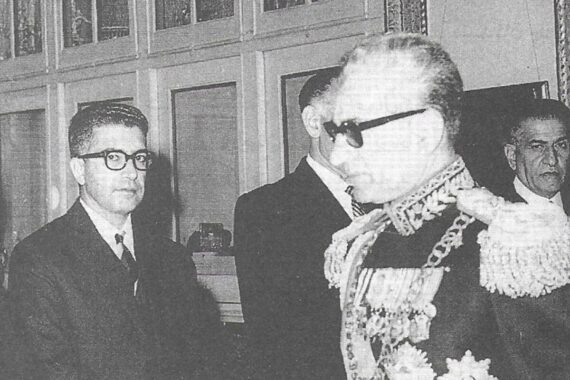
For Baghaei-Yazid, the danger facing doctors in Iran is painfully familiar. His father, Mohammad, studied medicine at Tehran University from 1946 before becoming a GP and working for the Imperial Iranian Army Medical Corps. Despite Iran’s neutrality in the Second World War, these were years of great upheaval in the Middle Eastern state, with a famine devastating Iran from 1942-43 and a growing nationalist politics focused on control of Iran’s oil and economy.
Mohammad went on to run the medical unit and dispensary for Iran’s intelligence and security services in the 1950s before coming to London with his wife and young children to train at Middlesex Hospital.
On his return to Iran in 1962, Mohammad became an MP for his hometown of Yazd, serving two terms before returning to medicine in the 1970s as medical inspector of prisons. In 1974, he built a medical centre in Yazd, Seyyed-Al-Shohada hospital, which remains one of the city’s principal medical centres.
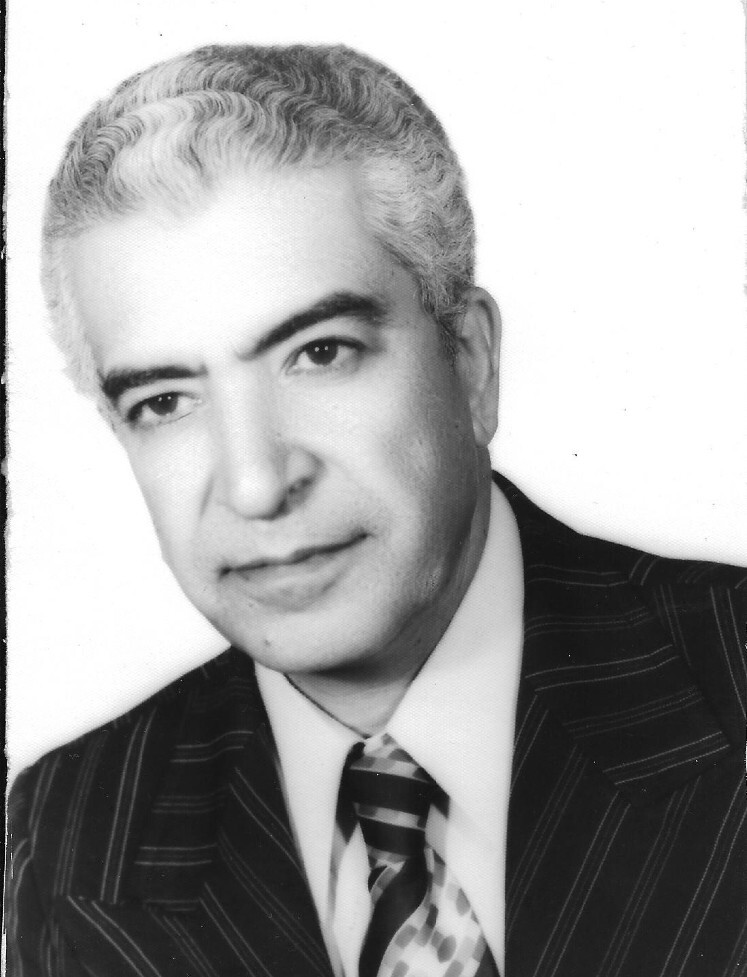
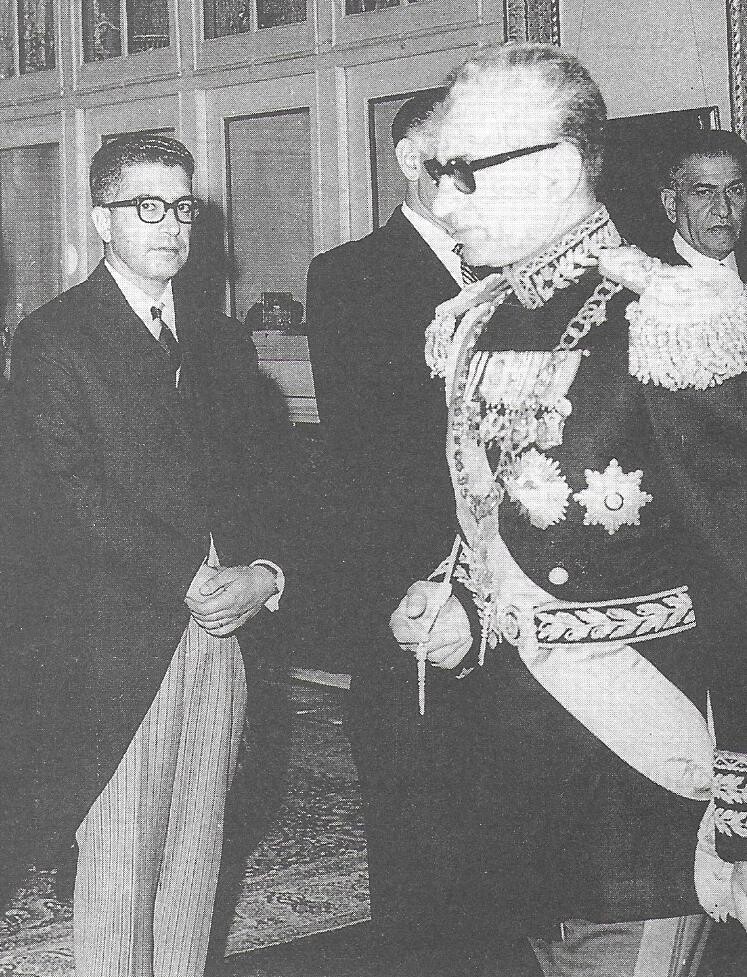
However, when Islamic revolutionary forces seized control of Iran from the monarchy in 1979, Mohammad and other doctors who had held prominent positions under the previous regime were wanted men.
After the revolution and in later protest waves, hospitals and medical sites became places where families gathered and information about state brutality spread. Then, as is the case still now, medics were accused by the regime of aiding unrest if they treated wounded protestors, and were often targeted as a means of suppressing medical evidence of the violence perpetrated by state forces.
Mohammad was accused of being a torturer for the intelligence services. In truth, his role had been a reforming one, working with organisations including Amnesty International and the Red Cross to uphold medical standards across Iran’s modernising prison estate. ‘He had a great record in making prisons more humane and seeking the release of prisoners,’ Baghaei-Yazdi says.
Then a 19-year-old medical student, Baghaei-Yazdi recalls pounding the streets of Tehran to collect petitions from people Mohammad had helped secure release for, to obtain clemency for him from the Islamic Republic of Iran.
Mohammad was executed on 8 May 1979, aged 51, after a few weeks’ detention and a brief, summary trial. Baghaei-Yazdi, his brother and mother fled to Britain that same summer, fearing further reprisals.
‘They killed doctors one by one,’ says Baghaei-Yazdi. ‘It was such a loss and waste to this once-great nation.’
‘No place for medics in Iran’
In the 47 years since the revolution, many other Iranian doctors have met a similar fate. IMS UK research indicates that 900 doctors have lost their lives at the hands of the theocratic regime since it took power.
And in recent years, the Iranian healthcare system has seen a rapid brain drain. 40% of Iranian GPs left the profession between 2020 and 2024, leading the Medical Council of the Islamic Republic of Iran (IRIMC), a non-governmental licensing body and trade union for doctors, to warn that Iran’s healthcare system was at risk of ‘collapse’.
That was before February’s outbreak of war. Baghaei-Yazdi says members of IMS UK have been deeply affected by the situation. ‘All our members are distraught because of the way that they have treated medical staff and nursing staff in Iran,’ he says. ‘Many still have friends and relatives working there.’
He adds that the pressures on medical staff have intensified during the conflict. ‘Doctors and nurses are under tremendous pressure,’ he says. ‘There have been shortages of medicine – Iran has only got around four months of supply left, which can run out very quickly.’
Reports have also come through to IMS UK of healthcare workers attempting to flee the state across the land border to Turkey. ‘A lot of doctors and nurses are trying to leave [Iran] as soon as they can, because staying there is so dangerous,’ Baghaei-Yazdi says.
The recent wave of attacks come at a brutal time for medics across the globe. A study from Médecins Sans Frontières (MSF) found there had been a record number of attacks on medical personnel and patients in conflict zones in 2025, with 1,981 people killed; compared to 944 deaths in 2024. States ‘are increasingly shirking their obligation under international humanitarian law to protect medical facilities, personnel, patients and vehicles,’ MSF says.
Risks are rising for healthcare workers in conflict zones, as states and armed factions increasingly wield heavy weapons such as missiles, and as international humanitarian laws that protect medics from gunfire are ignored. Sudan, Myanmar, Palestine, Syria and Ukraine have all seen high healthcare worker death tolls.
Baghaei-Yazdi hopes the regime that killed his father will be overthrown in the coming weeks. The IMS UK is preparing documents to attest to the brutalities inflicted by the regime on doctors in what they hope will be a Nuremberg type trial of the regime’s crimes against civilians.
He adds: ‘We want justice and recognition for all the loved ones that we lost during the Islamic Revolution and Islamic Reign of Terror all these years. That will be done, hopefully in good time, through proper judiciary and courts and fact-finding commissions.’
Baghaei-Yazdi says the execution of his father did not end his family’s commitment to medicine. ‘My brother and I went on to study hard after the death of my father. We joke that they killed one Baghaei-Yazdi and two doctor Baghaei-Yazdis were produced in his place.’
‘We need an end to our nightmare of a generation,’ he tells Pulse. ‘I hope the people of Iran will now rise up and make the nation safe for everyone, including doctors.’
Have you got a view you want to share with Pulse?
We’re always open to first-hand pieces and opinions from GPs.
Email your piece for consideration to be published on our site.