

‘Are we failing international medical graduates in GP training?’
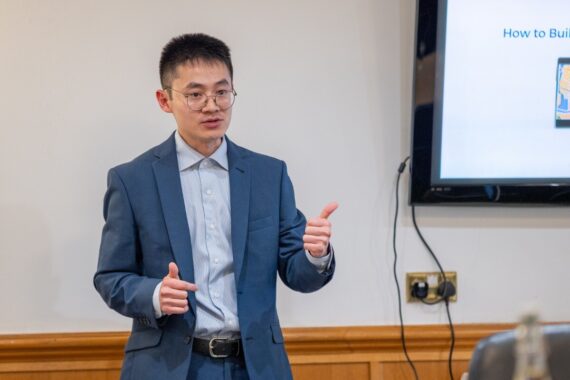


Dr Erwin Kwun asks why so many capable international GP trainees continue to struggle with the SCA, and whether training programmes are doing enough to prepare them for success
Nearly half of international medical graduates (IMGs) do not pass the Simulated Consultation Assessment (SCA) on their first attempt. In the RCGP’s most recent annual report, the ‘first-time’ SCA pass rate was 53.64% for IMGs, compared with 93.73% for UK graduates.
This is not a marginal difference. It is a persistent and striking gap that raises an uncomfortable question: are IMG trainees failing the SCA, or are training programmes failing to prepare them for what the SCA actually assesses?
The SCA was introduced by the RCGP in 2023 as the licensing assessment for GP trainees. The college describes it as an assessment of a GP registrar’s ability to integrate and apply clinical, professional and communication skills in general practice. Candidates must show that they can keep patients safe, adapt to different patients and illnesses, manage risk, complexity and uncertainty, and demonstrate appropriate behaviours and concern for patients.
So the SCA is not simply testing whether a trainee knows what to do. It is testing whether they can demonstrate safe and patient-centred consulting in a very specific format. And that distinction matters.
Many IMG trainees are safe and capable doctors in day-to-day practice. They can take a history, reason clinically and manage risk. But the SCA also rewards a particular way of communicating competence: making empathy explicit, eliciting ideas, concerns and expectations, verbalising clinical reasoning, and framing management as a shared process rather than a directive one.
For many IMGs, this is not how medicine was originally taught or practised. That does not make their previous approach inferior. It means they are being asked to learn a new consultation technique. The challenge is not a lack of interpersonal skills. Rather, the SCA requires trainees to make those skills explicit under exam conditions. Understanding that distinction is crucial if we are serious about reducing differential attainment.
What the assessment actually tests
The SCA assesses three domains: data gathering and diagnosis, clinical management and medical complexity, and relating to others. The RCGP consultation toolkit emphasises that data gathering and management occur within the consultation, while ‘relating to others’ skills run throughout. The assessment is not only testing whether a candidate reaches the correct diagnosis or management plan. It is also assessing how those decisions are reached and communicated with the patient.
For example in some cultures, care is demonstrated through efficiency and clinical precision. The competent doctor takes a medical history, reaches the correct diagnosis and initiates appropriate management, often without needing to verbalise every step. But in the SCA, care must be person-centred and visibly so.
This reflects the broader consultation model used within UK general practice. A cross-cultural study of doctor-patient communication found that UK participants reported significantly higher levels of patient participation in decision-making, communication quality and emotional expression during consultations than their Chinese counterparts. The authors concluded that patients in lower power-distance healthcare systems (like the UK) expect a more collaborative relationship with clinicians and are encouraged to participate actively in treatment decisions.
In other words, the consultation behaviours rewarded in the SCA reflect a healthcare system in which patients are expected to contribute to decisions about their care, discuss options and express preferences, rather than simply receive recommendations.
An IMG trainee may listen well and manage the patient correctly yet still lose marks in relating to other domains if the patient is not explicitly involved. As one trainee I encountered reflected: ‘I didn’t realise I had to offer options and ask what they thought.’
The problem is assumption. We assume trainees start GP training already fluent in person-centred consulting. We mention it briefly, then expect it to translate into performance. It often does not.
Why more practice is not always enough
The default response to poor SCA performance is to increase practice volume; see more patients, more roleplays. The logic is understandable. But more of the same does not necessarily solve the problem.
Repetition without recalibration consolidates the wrong habits. Trainees become more fluent in the consultation style they already default to. The feedback remains familiar: limited shared decision-making, insufficient exploration of concerns, not enough patient involvement.
What is needed is not just more practice, but different practice. That means explicitly deconstructing the trainee’s consultation, showing what person-centred care sounds like in real time, and rehearsing the specific behaviours that may feel unfamiliar.
The responsibility of training programmes
Training programmes can play a role in closing the differential attainment gap.
Support for IMG trainees varies considerably. Yet there is emerging evidence that structured intervention can make a difference. In the North West, a targeted support programme included early consultation analysis, tutorials, educational planning and use of the SCA consultation tool. Initial SCA results were promising, with an IMG first-time pass rate of 81% in February 2024 across the deanery – far above the national average.
Although caution is required when interpreting results from a single deanery and sitting, the findings are nonetheless encouraging.
How to close the differential attainment gap
First, make person-centred care explicit. Do not treat it as common sense. Teach the exact behaviours: verbal acknowledgement of concern, shared decision-making language, explicit safety-netting and collaborative management.
Second, stratify support by need, not cohort. Identify trainees early whose consultation style does not yet match the SCA format, and provide focused support before failure occurs.
Third, treat failure as feedback for the system as well as the individual. I have seen IMGs struggle through multiple attempts, only to pass once they receive targeted support. In hindsight, many describe a lack of clarity about what was actually being assessed.
Closing this gap matters not just for IMG trainees, but for general practice itself. IMGs make up a substantial proportion of GP trainees and of the workforce keeping practices open across the country. The SCA has an important role in ensuring every GP entering practice can consult safely. But when doctors who are safe to practise fail because of exam technique rather than clinical risk, we should ask whether training has adequately prepared them for the assessment.
IMGs and UK graduates sit the same exam to the same standard, but equal assessment isn’t quite the same as a level playing field. One group has spent a career immersed in the communication style being assessed; the other is often learning it from scratch, under exam pressure, with little consistent support to do so.
The results in the North West are not a fluke. It is what becomes possible when that gap in preparation is closed. The exam itself may be fair, but the runway to it isn’t always. Closing that gap in preparation should be a priority for GP training programmes.
Dr Erwin Kwun is a portfolio GP in Swansea. He is the author of Consultation Blueprint: Pass the MRCGP SCA with Confidence. He also provides personalised coaching for GP registrars, including IMGs preparing for resits.
Have you got a view you want to share with Pulse?
We’re always open to first-hand pieces and opinions from GPs.
Email your piece for consideration to be published on our site.
Related Articles

READERS' COMMENTS [4]
Please note, only GPs are permitted to add comments to articles







The article is saying that people who can’t demonstrate interpersonal skills, as required in the exam, don’t score marks in that domain? Am I missing something?
The main issue is that IMGs are starting from a lower level than UK graduates and don’t have time to catch up. Our final year medical students are more skilled at consultations than our IMGs.
Please can we break down the statistics in more relevant ways.
Some IMGs have better language skills than others – some have better language skills with either or both of English-speaking and non-English-speaking patients and colleagues than some of our ‘local graduates’.
Some IMGs are more familiar with UK health systems before they go into GP training, than others are – and this sometimes applies to local graduates too, but we do not have stats for this either.
I would suggest that some local graduates who do GP VTS in a different region of UK from their origin, may also have more difficulty?
Yes, I would be clear that the VTS should identify beforehand, and fairly early in their career, those trainees who are going to need additional support in communication or relationship skills – but I am also aware of some Trainers who (can I say this?) have not dealt with it. One Trainee was passed despite not being competent to examine women’s private bits as she considered them, er, ‘unclean’. Concerns had been reported to the Trainer, but they did not want to upset anyone and disrupt the ‘system’. I don’t think this was even an IMG, but that would have been picked up at my Medical School, and corrected by additional training under professorial supervision! Cultural influences need much more careful consideration by VT schemes, and I mean both religious/national culture and nhs/Health system culture equally. We get excellent and rubbish VT trainees and undergrad students, although most of both (that make it to our distant rural area) are exceptionally committed and polite and skilled, and interested.
“Make person-centred care explicit. Do not treat it as common sense. Teach the exact behaviours: verbal acknowledgement of concern, shared decision-making language, explicit safety-netting and collaborative management.”
But are there really any VTSs not already doing this? I took my GP exam in 2001 and we were focussing on it then!