

Investigation: How GPs are being told to limit NHS Health Checks
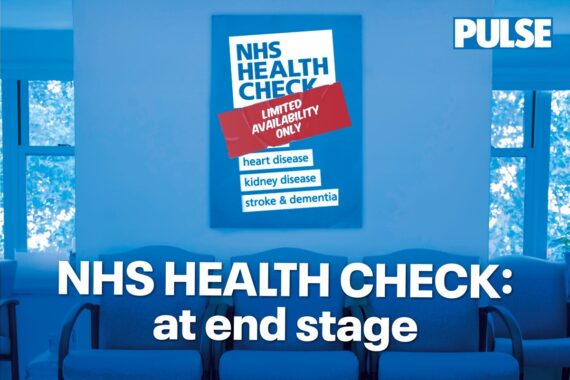


In the past year, Pulse reported on some local authorities telling GP practices to limit the number of NHS Health Checks that they could carry out and be reimbursed for. But a new Pulse investigation reveals this issue is far more widespread, with almost half limiting the checks. Anna Colivicchi looks at the effect on practices and patients
NHS Health Checks have been hailed by the Government as one of the main tools to make a shift ‘from sickness to prevention’ – but cash-strapped local authorities around the country are limiting the number of checks that can be carried out by GP practices annually, a Pulse investigation has found.
The prevention programme is meant to be open to all adults aged 40 to 74 years old who do not have any pre-existing health conditions – such as stroke, diabetes, kidney disease and certain heart conditions – and patients have been encouraged in national messaging to ‘book with their GP’.
The programme was launched in 2009 to ‘reduce ill-health from cardiovascular disease’, and since 2013, local authorities have been responsible for commissioning NHS Health Checks, with most checks carried out in GP surgeries as part of a locally commissioned service. The Government has recently announced that the programme will be expanded to include menopause questions, to benefit five million women.
But a Pulse investigation has found that budgetary pressures faced by local authorities could undermine the programme. The issue of local councils placing limits on the number of checks first came to light when Pulse revealed that GPs in Warwickshire were told they had to cap the number of checks due to ‘budget constraints’ faced by the local council. At the time, GPs told Pulse that this was ‘disheartening’ since the checks provided opportunities to reach patients to talk about lifestyle changes.
‘It is a pity as we’ve found new diabetics and hypertensives doing the checks and used them as opportunities to talk about diet, exercise, smoking and alcohol,’ one GP told Pulse at the time.
Pulse then uncovered that GP practices in South Gloucestershire were also told to limit the number of checks, meaning that practices could usually offer checks to only 62% of eligible patients, with deprived practices further penalised. ‘The amounts of money were fairly small for the workforce requirements, and have just shrunk,’ another GP partner said.
Now FOI data gathered by Pulse has uncovered that at least 70 local authorities out of 151 in charge of commissioning the programme are limiting the number of checks that GP practices can carry out and be reimbursed for – effectively limiting the number of patients that can access the checks every year.
Why councils are introducing limits
Local authorities have a statutory obligation to invite the whole eligible population for a health check every five years, equating to at least 20% per year. But our analysis of FOI data has shown that many local authorities set limits below 20% of the eligible population.
The service is commissioned by local authorities who choose how to prioritise their public health grant, which is used for NHS Health Checks alongside other services. But as pointed out by the National Audit Office in a recent report, the grant reduced in real terms from £4.48bn in 2015/16 to £3.53bn in 2023/24 – a 21% decline.
The NAO report also looked at funding levels per health checks, explaining that local authorities are free to use different payment methods – but that most providers are being paid ‘based on activity’. It referenced at 2021 Public Health England survey which found that local authorities paid ‘most providers between £21 and £40 per health check’.
To find out if this has changed since, Pulse submitted a separate FOI request to local authorities. We found that the amount of money paid per health check this financial year continues to vary significantly by local authority – with practices at the lower end of the scale now being paid just below £10 per check, while practices at the opposite end received £45 per check. Some practices also receive money per invite alone, but this is usually a low payment ranging between £1 and £2.
According to the FOI data (see below), of the 72 councils that have declared they impose a cap on checks per year, 16 are limiting the checks to 20% of the eligible population; while a further 11 have imposed a limit between 10% and 15%. The other 45 councils who limit numbers of checks said they have specific limits set for each practice – in Plymouth, for example, the council sets an individual target number of checks for each GP practice to ‘monitor spending against budget throughout the year’. This means that in most cases, practices are not paid for checks over these limits.
The FOI data also revealed that some local service specifications for the programme – including in Reading, Surrey and Wiltshire – include the right for local authorities to ‘introduce a cap on activity volumes’ based on ‘available funding’. And some local authorities also said that despite not having imposed a specific limit per GP practice, the designated budget cannot be exceeded and that they would implement limits ‘if there is risk of overspend’.
In terms of how the statutory obligations are being enforced, as noted by the NAO, although local authorities have a statutory requirement to offer health checks, the legislation does not provide the Government ‘with levers to influence local authorities’ performance’. And the legislation also did not specify that local authorities must meet targets for the numbers or percentages of eligible people to attend health checks and the Department of Health and Social Care has not subsequently stated any expectation for attendance.
Ashley McDougall, the NAO report’s director, tells Pulse that while 20% of the eligible population is the ‘implied target’ to cover the whole population over five years, NAO found that only 3% of local authorities ‘were commissioning at that level’.
‘The budgetary limits that they’re using, and their actual commissioning practices, are leading to levels of health checks way below what is required of them,’ he says. But he adds that one of the challenges is that the system ‘isn’t really designed to maximise the number of health checks’.
Local authorities commission NHS Health Checks through their public health grant in a way that they think best meets their local priorities. ‘It’s very much down to local discretion, local priorities, local budgets,’ says Mr McDougall, ‘so they might say they put a cap on that and that could be because they’re spending more on other pressures.’ Our findings suggest that to cope with the current funding levels, local authorities are capping the number of invites and checks.
Many of the councils that have introduced limits said that they have done so as they ‘operate within a finite public health budget’, so they set ‘delivery targets’ which are not intended to restrict access but to manage capacity ‘fairly’. Others defended the targets saying they have been set ‘using national benchmarks’ and ‘adapted locally to improve uptake’, rather than being driven by budget considerations.
In response to Pulse’s findings, councillor Dr Wendy Taylor, chair of the Local Government Association’s health and well-being committee, said that local authorities have faced ‘significant funding pressures’ over the past decade, which have impacted their ability to deliver services ‘at the scale originally intended’. ‘We have long called for sustainable investment in public health so councils can expand preventative programmes like NHS Health Checks, which ultimately improve population health and reduce pressure on the health and care sector,’ she added.
Limits affecting patient care
This is not to say GPs aren’t offering health checks. In 2023/24, the level of health checks had recovered, post-Covid, to 1.42 million checks completed – the highest level since 2015. According to the Local Government Association, there was a record level of invites in the first quarter of last year – but as pointed out by NAO, the data on the number of invites to health checks are ‘too problematic to use with confidence’, so there is no accurate picture of how many people have been invited.
Regardless of whether invites are going up, GPs say they are being hampered by the limits on the number of health checks they can actually provide and receive remuneration for. A South Gloucester GP says that the limits mean a lot of patients won’t be able to have a check every five years. ‘We actually achieved 60% last year, we could have achieved more, but were told to stop work in around September,’ he tells Pulse. ‘We had previously hit higher targets. So even if we achieve similar levels of activity to last year our income has dropped nearly 12%.’
‘If properly commissioned and funded we could do more,’ says one North East GP. ‘But as it is with sporadic funding and inability to incorporate proficiently into primary care, it will remain as a sporadic check, and not as it should.’
GPs in areas where the caps have been implemented tell Pulse that they have had to offer checks outside of the funding limits to patients that have come forward. A GP in Herefordshire tells Pulse that her practice is given a capped number of checks to carry out each year – around 1.6% of the practice’s whole population – and any above this are not funded. But her practice continues to deliver some checks ‘above that number to patients who come forward’.
‘Prevention is an important part of GP care, and it is one of the platforms touted by the current Government, so it seems counterproductive to limit funding for NHS Health Checks,’ one Warwickshire GP tells Pulse. ‘In my surgery, we’ve had a high take-up rate for these checks over the last few years and have run evening and Saturday clinics to accommodate working people. The whole point of a screening test is to catch asymptomatic people, and by not funding NHS Health Checks adequately, we’re missing out on diagnosing people, particularly with diabetes or hyperlipidaemia.’
In her practice, the checks have resulted in detection of newly diagnosed diabetics, hyperlipidaemia and hypertension and that they have been used to encourage lifestyle changes and treat them if necessary. ‘This will reduce the number and cost of possible sequelae from these conditions over time – but not during the lifetime of the current Government – including CVA and IHD, plus the usual diabetic complications,’ the GP adds.
RCGP chair Professor Victoria Tzortziou Brown says that the limits create ‘uncertainty’ for practices and could mean some patients may miss out, while others are left confused about their eligibility. ‘GPs want to help patients stay well, but preventive programmes must be backed by strong evidence and funded in a way that reflects the reality of delivering interventions on the ground,’ she says. ‘This includes ensuring that programmes are commissioned and resourced in a way that supports consistent delivery and focuses on those most likely to benefit.’
Professor Andrew Lee, from the school of medicine and population health at the University of Sheffield, says it was ‘disappointing’ to hear that health checks are being limited in some areas. ‘The programme has been criticised at times for low uptake,’ he tells Pulse. ‘Since 2013, less than half of eligible individuals have received a health check, particularly men.’ But he adds that there is evidence that when the programme is taken up, there is an increase in detection of risk factors and disease, and reductions in cardiovascular disease risk.
Unique challenges for deprived practices
Professor Lee adds that take-up tends to be low in deprived communities – which GPs warn is a situation exacerbated by limits imposed by local authorities. The South Gloucester GP says that the ‘targeted model’ put in place in their area means that deprived practices can only deliver health checks to 46% of the eligible population rather than 62% if they aren’t deprived, which seems ‘unfair to those populations’. This is because in their area, the local authority adopts a two-tier payment tariff, with a standard rate of £23 per check and an enhanced rate of £31 per check (for patients living ‘in an area of high social deprivation’), meaning deprived practices can offer fewer checks within in the budgetary limit. ‘We should be able to offer all our eligible patients an NHS Health Check, but under these rules, we can’t once a financial cap has been reached,’ the GP tells Pulse.
Research published last year found that the uptake of the programme remains ‘inequitable’, particularly among people from socioeconomically deprived communities, where its impact ‘could be greatest’. Women, older individuals and those from higher socioeconomic backgrounds are ‘more likely to attend’, while men, smokers, and those from deprived backgrounds—often at the highest risk for CVD—are less likely to engage.
Some local authorities have tried to prevent disadvantaging deprived practices and their patients, by basing the limits on deprivation quintiles – which allow practices to be split into five different sections based on their level of deprivation. For example, in Liverpool practices with quintile 1 (with the most deprived populations) have a target of 100% of eligible patients, so no limit, while quintile 5 practices have 35% as the limit.
But limits being in line with deprivation is not a requirement of the programme, as pointed out by NAO. ‘Although it is well known that people from some ethnic groups or from more deprived economic backgrounds are at higher risk of developing CVD, DHSC has not set local authorities a requirement to focus more specifically on these groups,’ their report says.
Remuneration not reflecting the workload involved for GP practices
Regardless of the limits, many GPs say there are issues with how the programme is funded, with remuneration not reflecting the work that practices do to carry out the checks, and a lack of appropriate financial incentives. ‘The process is notably time consuming, involving multiple steps and significant administrative input,’ one GP says. ‘Given the extensive nature of the checks, the current level of remuneration does not reflect the workload involved, making it challenging for the practice to remain fully invested in delivering the service at scale.’ However, as we will discuss in our next piece as part of this investigation, GPs have told Pulse they feel ‘it is the right thing’ to offer the checks, and believe they can be useful to provide in certain circumstances and for specific patient groups – but they recognise the many issues with how the programme is funded.
Our FOI on the amount of money that practices receive per individual health check has shown a wide variation around the country, both in terms of how much practices are paid and in terms of what groups of patients are prioritised. In Wigan, for example, practices are paid £11 per check for patients aged 60 to 74, but the payment increases to £14.50 for patients aged 40 to 49. Other areas have higher payments for patients ‘identified as higher risk’ or from deprived areas, but this is not consistent around the country, as some local authorities provide one fixed payment regardless of the type of patient.
The NAO’s Ashley McDougall argued that the fact that NHS Health Checks are not adequately incentivised, and are not contractual for practices, could be undermining the programme. ‘Health checks are not a national screening programme,’ he explains. ‘So some GPs may well think that that’s not actually sufficiently important, because if it was, it would either be in the contract, or there’d be a DES or there’d be some sort of national screening programme which would have appropriate incentives.’
The NAO has recommended that the Government look into different incentives and more serious commissioning line to maximise the programme and make it more effective, and more manageable for practices. Mr McDougall says they told the Government: ‘You need to work out a very serious commissioning line that goes down, because if you want the programme, then either incentivise it or put it in a contract. So if they haven’t done those things, then that could mean that it just hasn’t been prioritised.’
NHS Health Checks developments
The Government has recently pledged to add menopause questions to the checks – so it looks like the programme is not going anywhere in the near future. But the Government will need to think how to properly incentivise the checks and whether local authorities are best placed to commission them given the decreasing levels of funding and the increasing budgetary pressures.
The specific questions on menopause that will be included have yet to be decided and will be developed over the coming months with advice from health experts – but GP leaders have also raised concerns around widening the checks, and whether this could ‘dilute’ their purpose.
A review of the programme in 2020 found that greater use of technology may help target, reach and personalise NHS Health Checks for individuals, and the Government has committed to developing a digital NHS Health Check (currently in test, with a target for full roll out by 2028) to support local authority delivery of the programme.
According to the NAO, it’s likely that a digital offer will provide the universal element of the programme and that face-to-face health checks can then be targeted at higher risk individuals and those who experience barriers to engagement via digital and self-service models.
The Government told Pulse that they have set out an intention to publish a cardiovascular disease Modern Service Framework this year, which ‘will tackle one of the country’s biggest killers head on’ – but there are currently no further details on this.
Professor Lee argues that there is a need for a more targeted screening focused on these higher risk groups that the programme currently reaches. ‘So the key question here is whether resources are being made available for this purpose,’ he added. ‘If not the NHS Health Check programme, then what is there in place to do this? At the end of the day, disease prevention is an investment to reduce future ill health burden and healthcare costs, something that the NHS should not disinvest in and can ill afford to neglect.’
But, while rationing of any programme is rarely welcomed, many GPs are sceptical of the benefit of NHS Health Checks at all – which we will be exploring in the next article of the series.
You can hear more about our investigation into health checks on our most recent episode of Pulse in Focus: The podcast for GPs. Listen here.
Visit Pulse Reference for details on 140 symptoms, including easily searchable symptoms and categories, offering you a free platform to check symptoms and receive potential diagnoses during consultations.





