

Wegovy in patients with CVD – who will be eligible under NICE plans
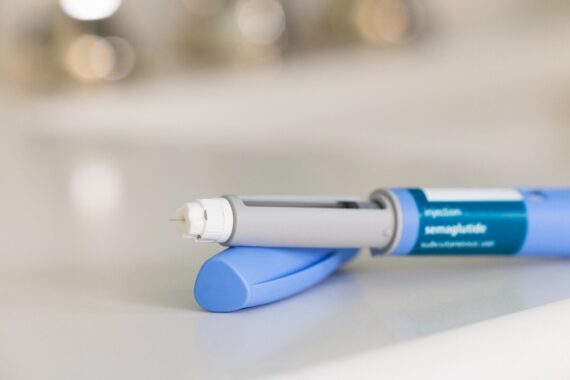


NICE has recommended that patients with established cardiovascular disease who are also overweight should be offered semaglutide (Wegovy). Emma Wilkinson looks at who is eligible and what it will mean for GPs.
The NHS in England is set to expand the use of semaglutide (Wegovy) to more than a million adults with a high cardiovascular risk, under final draft recommendations published by NICE this week and due to be finalised at the end of April.
It means semaglutide (up to a maintenance dose of 2.4mg once weekly) can be used, within its marketing authorisation, alongside a reduced-calorie diet and increased physical activity, in people who have already had a heart attack or stroke or have symptomatic peripheral arterial disease.
Yet unlike other guidance on use of GLP1-s for weight loss, the threshold does not require the individual to be living with significant obesity.
To be eligible, a patient must have existing cardiovascular disease that falls into the above three categories but also a body mass index (BMI) of at least 27kg/m2, which is classed as overweight.
Why have they made this recommendation?
Novo Nordisk, the makers of Wegovy, submitted evidence to NICE from the SELECT study published in 2023. This multinational randomised double-blind placebo-controlled phase 3 trial compared semaglutide with placebo in 17,604 people with a BMI of at least 27 kg/m2 and established cardiovascular disease but not diabetes.
All patients who took part had healthy lifestyle counselling as well as continuing their standard cardiac medications, such as statins. The majority of people in the study were on antiplatelet drugs and beta-blockers.
Reporting in the New England Journal of Medicine, the trial found a 20% reduced risk of further cardiovascular events in the semaglutide group compared with placebo over a three-year follow up.
The reduced risk was also seen across a range of secondary endpoints including being hospitalised for unstable angina or heart failure.
Crucially the benefit seen was later shown to be independent of the amount of weight loss achieved and was see early – before much weight had been lost – explains Professor Riyaz Patel, clinical lead for preventive cardiology at Barts Heart Centre.
‘The exact mechanism as to how this drug leads to these benefits is still being investigated but is partly attributed to multiple parallel metabolic and vascular health benefits,’ he adds.
Professor Patel notes that most participants in the SELECT trial were Caucasian, ‘so we don’t know if this benefit applies to people from all ethnicities’.
Unlike with other guidance, NICE has not set different thresholds of eligibility for ethnic groups who are at higher risk of cardiovascular disease but setting the criteria at lower 27kg/m2 would be outside the marketing authorisation of the drug, the committee said.
Ultimately the reduction in cardiovascular events in this group means the cost-effectiveness of semaglutide is ‘within the range that NICE considers an acceptable use of NHS resource’, the committee concluded. How much it will cost the NHS is not exactly known as a confidential deal has been struck with the company on price.
What does it mean practically for GPs?
NHS England has estimated that there are 1.2 million patients who would now be eligible for the weight loss jab under the new recommendations. This would be anyone who had:
- previous myocardial infarction
- previous ischaemic or haemorrhagic stroke
- symptomatic peripheral arterial disease (they have intermittent claudication with an ankle-brachial index of less than 0.85 at rest, or have had a peripheral arterial revascularisation procedure or an amputation because of atherosclerotic disease), and;
- a body mass index (BMI) of at least 27 kg/m2.
Integrated Care Boards (ICBs) are expected to fund medications within 90 days of final NICE recommendations being published.
Yet the expectations on GPs are not yet clear. Questions remain around whether patients should be contacted proactively or this becomes part of a routine review, what levels of follow-up those on the drug will need, and what the lifestyle advice portion of the guidance will look like.
The NICE recommendations state that the benefits of the medicine are seen alongside diet and physical activity changes, but it does not state what this should look like, ie, is it brief advice or a referral to a support programme. The need may vary depending on individual circumstances.
NHSE told Pulse that local services will be working through NICE guidance and determining how to best deliver semaglutide in this indication over the coming months, including advice on the lifestyle aspect. In theory there could be separate routes for prescribing including through cardiology, GP and weight loss services.
In the model presented to NICE, the company said those in the trial were provided with advice – including leaflets on healthy diet, smoking cessation and physical activity – which is similar to what already happens in cardiovascular risk management, so they had not included a separate cost for this.
It was noted that the lifestyle intervention used in SELECT included healthy lifestyle counselling delivered nine times in the first year of treatment, and four times a year in the following years on treatment.
Dr Stephen Lawrence, a GP and associate clinical professor in primary care at Warwick University says GPs are ‘really pressured’ so while this is good news for reducing risk in this group, based on the available evidence, for this to be implemented effectively, it will need clear pathways. Detail will be needed on identification of patients, follow-up and reviewing other medications patients may be on, he adds.
‘Those local guidelines and pathways need to be clarified. Otherwise, if it’s not structured, the patient will lose that opportunity to get the best treatment.’
He adds that giving people the injection is only part of the picture. ‘In every single trial for a GLP-1 receptor agonist, those results have been achieved with lifestyle management, every single one, without exception.’
Not doing it risks not getting the desired effect but also potentially causing harm, he adds, and any benefit will not be sustained. This includes advice on strength training and protein intake to counter muscle loss associated with weight reduction, he notes.
Professor Robert Storey, professor of cardiology at the University of Sheffield says prescriptions in this group will need to be ‘appropriately targeted’, particularly due to the reduction in muscle mass that can happen which may make the drug inappropriate in frail people.
‘The benefits also need to be balanced against the risk of side effects.
‘These issues and the need for training people to inject the drug as well as ongoing monitoring and prescribing requires the allocation of NHS resources to ensure the benefits of this NICE guidance can be fully realised.’
How long will people remain on treatment?
When NICE published its guidance on use of semaglutide for weight loss in 2023, it specified this must happen alongside diet and exercise advice, but only for two years and within specialist weight management services. The timescale was based on the length of evidence available at the time.
Under these rules patients must have a BMI of at least 35kg/m2 or 30.0 kg/m2 if they met criteria for referral to NHS weight management services, and at least one weight-related co-morbidity. But here doctors should also stop treatment if someone hasn’t lost at least 5% of their body weight after six months.
There is growing understanding that obesity is a chronic long-term condition. Yet GLP-1 drugs are not without side-effects and it is thought as many as half of people stop taking them within a year. Studies have shown that in most people the weight then rebounds.
One trial of tirzepatide noted that weight regain seen after stopping the medication was also associated with reversal of cardiovascular benefits.
In the latest guidance, which is focused on cardiovascular risk, a BMI of 27kg/m2 is part of the criteria for starting the drugs but there is no recommendation on stopping. The goal is to reduce a person’s risk of having another cardiovascular event.
The medicine’s product information does however say that doctors should review treatment regularly. Ultimately this will be decision for the clinician to make based on the patient’s circumstances, NICE advised Pulse.
There may be patients already taking tirzepatide who would now be eligible under these latest recommendations, but the recommendations only relate to the GLP-1 as a new option, rather than a switch from an alternative.
On this issue, NICE says any decision about whether to change or adjust a patient’s treatment should be made jointly by the clinician and patient, taking into account individual circumstances, preferences and values under existing shared decision-making guidance.
Are there other at-risk groups who may be missing out?
Those who have already had a heart attack or stroke are not the only group at high risk of cardiovascular events, experts have noted.
People with atherosclerotic angina is one example of a group who would not be automatically eligible under NICE recommendations. If they also have type 2 diabetes, they may qualify for a lower 1mg does of semaglutide (Ozempic) under NICE’s guidance on type 2 diabetes.
Professor Terry McCormack, professor of primary care cardiovascular medicine at Hull York Medical School, adds that the other group that should be considered is people with familial hypercholesterolaemia.
‘They are the most likely people to have a myocardial infarction below the age of 60. One in six of them will have an MI at that early age and they make up one in 250 of the population,’ he explains.
At the moment, this group is not covered by the NICE recommendations, which were made solely on the population included in the SELECT trial.
Dr Lawrence adds that there is a risk of inequality due to the varying eligibility criteria seen across different guidelines that do not always seem to be aligned.
In type 2 diabetes for example, GLP-1 medicines are recommended for most only if their blood glucose is not controlled on other medications, but cardiovascular benefits have been shown in this group.
‘It raises some really important points around equity and guideline alignment.’
Visit Pulse Reference for details on 140 symptoms, including easily searchable symptoms and categories, offering you a free platform to check symptoms and receive potential diagnoses during consultations.
Related Articles

READERS' COMMENTS [2]
Please note, only GPs are permitted to add comments to articles







So that is an extra £3,000,0000,0000 on the nhs drug bill alone just for this.
Where is the magic money tree ?
Are we cuttimg other services.?
Everyone always asks where all this extra nhs money goes, when we are not seeing more inpatients /outpatients /operations.
It is logged by the press as nhs waste/ inefficiency and reasons to dump the nhs.
3Bn is about right for 1.2 million patients and 2000 pounds a year. Ameliorating factors are it will be phased in and over time the cost will drop through contracts with the companies.
AI told be beclomethasone inhalers cost 0.3Bn and is the highest single drug cost. The total NhS drug cost is 20Bn and the total primary care Cost is 10bn. So Wegovy is really significant but I bet in a few years it will be a few pounds a jab.
AI told me NICE estimates 9Bn saving from a 20% reduction in MIs But that transfers the cost to diseases that kill more slowly… and may cost more to manage.. also AI is not always accurate.