

What is causing this toddler’s excessive thirst?
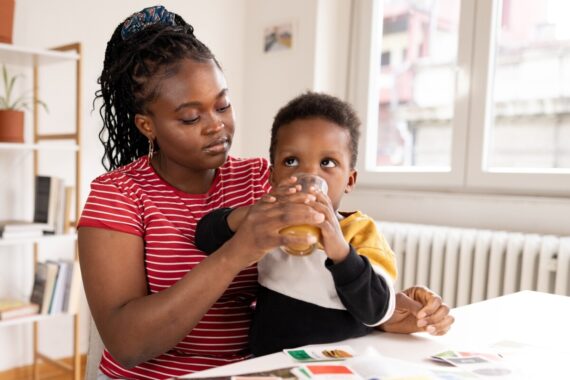


Case of the month: GP and paediatrics specialist Dr David Capehorn asks what the diagnosis could be in a toddler who presents with excessive thirst and urination, but otherwise normal behaviour and normal glucose on a urine dip. Put your answers in the comments below!
A 2½-year-old boy is brought into your surgery because, as his mother explains, ‘he’s drinking loads of water’. She says he is constantly thirsty, asking for drinks repeatedly throughout the day and night. His nappies are ‘always soaked and leak’, yet his behaviour seems otherwise entirely normal. There has been no weight loss, no fever and no vomiting, and his appetite is unchanged.
These symptoms have crept in gradually over several months. His mother wonders whether it has simply become a habit, but adds that he becomes very irritable if she tries to limit drinks; she is also worried he could have diabetes and has brought a specimen of urine for you to test. She doesn’t know how much he is drinking in total, as he also goes to nursery. There is no history of constipation, no previous UTIs, and he had an uncomplicated birth after an uneventful pregnancy. There is no relevant family history.
In the consulting room, he appears bright, interactive and well. Observations are normal. There are no findings on general or systemic examination, and his weight plots on the 25th centile, although the child’s red book isn’t available to check any trend.
You carry out a urine dipstick test which indicates normal glucose levels and no ketones.
Given the child is otherwise well and behaving normally, you reassure the mother that he seems well and that no further tests are needed for the time being, advising her to come back if anything changes.
Within two weeks, the mother brings the child back in, saying she is worried about his ongoing thirst and nappy soaking. She is not sure, but feels it might be getting even worse. Either way, she says, this is ‘really not normal’ and she is convinced there is something wrong.
Given the mother’s renewed concerns, and before specialist referral, what are the most informative next investigations to perform in primary care? And what is the likely diagnosis?
Put your suggestions in the comments below. Answers to be revealed in the coming weeks!
Visit Pulse Reference for details on 140 symptoms, including easily searchable symptoms and categories, offering you a free platform to check symptoms and receive potential diagnoses during consultations.
Related Articles

READERS' COMMENTS [7]
Please note, only GPs are permitted to add comments to articles







Well, the child is certainky reported to have diabetes. But unclear if this is mellitus, insipidus, psychological, or social.
So long as he remains well, and having reviewed the family history, check sleep duration patterns, and a fluid balance and foods diary is essential, along with testing for sugar on several samples, and ensuring there is no excess diuretics or salt in diet.
I believe our local area prefers serum glucose levels over HbA1C for screening, which is arranged anyway by an urgent referral to Paediatrics, wherein we could discuss any other interim measures or testing.
I am sure the commonest cause here is DM, in which case it is good to catch it before the patient actually becomes unwell, if that is possible (rarely is it).
Diabetes mellitus seems unlikely due to no obvious weight loss. And other wise no findings. This might be insipidus. This could be from pituitary pathology. It may also be functional due to chronic excess fluid intake which leads to a temporary inability to concentrate urine. A renal tubular problem is unlikely. Factitious disorder imposed on another (munchausen by proxy) eg with diuretics would be worth considering. Admit for bloods , ability to concentrate urine.
Measure total urine output in 24 hours and confirm polyuria. Serum sodium and serum osmolality alongside urine sodium and osmolality will allow confirmation of inability to concentrate urine. Suspect diabetes insipidus if lots of dilute urine with possible high serum osmolality. Secondary care will investigate for underlying cause.
The urine dipstick test will be the initial and quickest assessment. If a urinary tract infection (UTI) is suspected, send a sample for culture.
If diabetes is a concern, make a same-day referral to the pediatric team on call.
If the urine test does not indicate diabetes, proceed to send blood tests to rule out diabetes and renal disease
Dipsticks are neither specific nor sensitive enough for screening nor diagnosis of mellitus so serum glucose/HbA1c is imperative.
If normal, then proceed to rule out insipidus with fluid deprivation urine test for osmolality and serum ADH, then MRI pituitary if positive (which will also exclude a highly unlikely brain tumour).
Always exclude hypernatraemia of course (proceed to check serum ACtH /cortisol etc,if sodium raised, though the child needs admission for this)
If investigators normal, then habitual polydipsia is almost certain, and simple advice on fluid restriction should reverse the problem.
Urine dipstick is absolutely NOT a valid test in any age for diabetes mellitus, but will help to exclude a UTI.
This child needs a capillary blood glucose (CBG), which I would do myself. HbA1c is not valid in children or those with osmotic Sx for <2-3/12.
Even if the CBG was normal, I'd send the child to be seen by paeds today.
Differential Diagnosis
T1DM–check BG
Diabetes insipidus –do urine osmolairity test
??head injury –any hx of fall
How much is the child drinking ?urine out put ?? dehydration
Child will need referral