
Managing vaginal discharge – practical case lessons for GPs
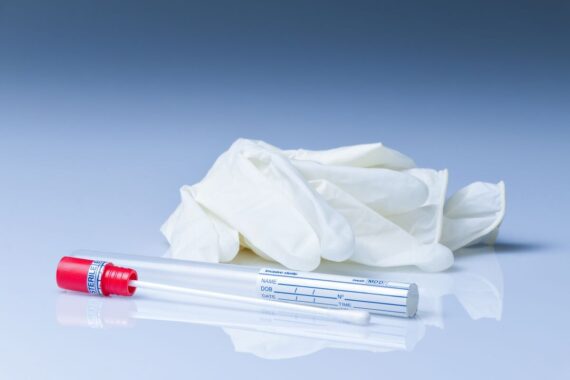


In this case-based eLearning CPD module, Dr Toni Hazell discusses how to manage consultations about vaginal discharge, including discharge in the menopausal years, cases of recurrent thrush and bacterial vaginosis and discharge after sex with a new partner. Complete the full module on Pulse 365 today
Learning objectives
This case-based module will support your knowledge and understanding of:
- Acute and recurrent vulvovaginal candidiasis and bacterial vaginosis.
- When to consider non-infective causes of vaginal discharge.
- How to manage partner notification.
- How to take a sexual history.
Case 1: Vaginal discharge in the menopausal years
1. You are doing a phone surgery when Stephanie rings – she is a 64-year-old woman and has called to ask for a prescription for some cream for ‘thrush – I get it all the time’. Looking back at her notes, you see that she has had three phone encounters with the out of hours team in the last six months and has been prescribed clotrimazole each time without being seen. She has no medical history and doesn’t take hormone replacement therapy (HRT). What are your initial thoughts?
Symptomatic candida is much less common after the menopause, particularly in women who aren’t using HRT – it is more likely to be seen in those who take HRT or who use a sodium-glucose cotransporter-2 inhibitor (SGLT2i) to treat their diabetes.1-3 It is concerning that she has been treated three times on the phone, and she definitely needs to be seen face to face and examined. Discharge can increase due to the effects of genitourinary syndrome of the menopause (GSM) – as oestrogen falls, the vaginal mucosa thins and there is a reduction in superficial epithelial cells, glycogen and Lactobacilli. Vaginal commensals are more predominant, and the pH of vaginal secretions rises, which can lead to more noticeable discharge.4
2. You are about to see Stephanie face to face and are wondering what other differentials you might need to consider. What questions should you ask her?
Asking about other symptoms of GSM will give you an idea of whether this is the likely diagnosis. These include vaginal itching, dryness and burning, as well as urinary symptoms and pain on intercourse, if she is sexually active. If she isn’t sexually active, is this from choice, or did she stop having sex due to pain? Has she also been treated over the phone for presumed urinary tract infections, possibly without a urine being sent for culture? GSM symptoms often don’t develop until some years after the menopause, and they may start gradually. Women often don’t declare them due to embarrassment, or because they feel that such symptoms are a natural consequence of getting older and not worth bothering a healthcare professional with.4 It is also worth checking if this discharge is new – she has had 3 phone calls in the last six months, but what about before that? New discharge in a woman over 55 can be a presentation of endometrial cancer – NICE5 advise an ultrasound for a first presentation with discharge at this age, or if it is not the first presentation but the woman also has thrombocytosis or haematuria. Has she had a recent FBC, and if so, what was the platelet level? Does she have any vaginal bleeding that she hasn’t mentioned?
3. You examine Stephanie – there is a thin white discharge at the introitus which does not look typical for thrush. You take swabs. Her labial tissue looks pale, and you are unable to do a speculum examination as she cannot tolerate even the smallest speculum – a very gentle attempt, with her consent, produces some contact bleeding, after which you stop. What would you do next?
Stephanie’s history and examination are typical of GSM and on further questioning, the symptoms have been going on for some years, with no vaginal bleeding or other concerning features for endometrial malignancy. You explain to her that she probably doesn’t have thrush (later confirmed by normal swab results) and that you think she is suffering from the prolonged effects of a lack of oestrogen after the menopause. You recommend vaginal oestrogen and she is happy to try this. There are a variety of preparations available, as creams, gels and pessaries and none are necessarily better than any others – the ‘best’ one is the one that the woman feels able to use. Stephanie is not keen on the idea of a pessary and doesn’t want anything which will feel too greasy. You therefore try estriol vaginal gel and advise her to use it daily for 3 weeks and then twice a week. More information on the different preparations is available in this Primary Care Women’s Health Society (PCWHS) resource.6 You also explain that she can combine this with a non-hormonal moisturiser and/or lubricant to use during sex. You advise her that if her symptoms fully resolve then she can continue this lifelong (as her symptoms are likely to return if she stops), but that she should come for review if things aren’t improving, or if they are generally improving but one area remains sore. A persistently itchy or sore area in the vulva should prompt consideration of malignancy and referral on the appropriate pathway. You arrange in any case to review her in 3 months.
Click here to complete the full module on Pulse 365 and log 2 CPD hours towards revalidation
Dr Toni Hazell is a portfolio GP in north London
References
- Hoffmann J et al. Prevalence of bacterial vaginosis and Candida among postmenopausal women in the United States. J Gerontol B Psychol Sci Soc Sci 2014 ;69 (Suppl 2):S205-14
- Saxon C et al. British Association for Sexual Health and HIV national guideline for the management of vulvovaginal candidiasis (2019). Int J STD AIDS 2020 Oct;31(12):1124-44
- Miao V et al. Severe vulvovaginal Candidiasis associated with Sodium-Glucose Cotransporter 2 Inhibitor use in postmenopausal women. J Low Genit Tract Dis 2024;28(4):371-6
- British Society for Menopause. Genitourinary Syndrome of Menopause (GSM). Nov 2025.
- NICE. Suspected cancer: recognition and referral. [NG12] Jan 2026
- PCWHS. Genitourinary syndrome of the menopause (GSM). May 2025
Visit Pulse Reference for details on 140 symptoms, including easily searchable symptoms and categories, offering you a free platform to check symptoms and receive potential diagnoses during consultations.