

Government to invest £1bn as part of pandemic readiness strategy
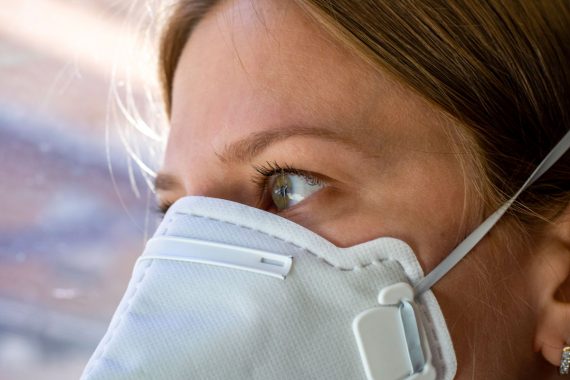


The Government will invest £1bn over the next five years into readiness for a future pandemic, it has announced.
The pledge comes as part of the Government’s Pandemic Preparedness Strategy, which promised to increase PPE stockpiles, improve access to vaccines, and increase testing capacity.
The strategy document said the changes were ‘backed by investment of around £1bn for health protection during the current Spending Review 2025 period, with any later funding being subject to future spending reviews.’
The Spending Review 2025 period (SR25) sets departmental budgets for day‑to‑day spending until 2028‑29, and until 2029‑30 for capital investment.
On PPE, it said: ‘DHSC will continue to invest to help meet its pandemic preparedness stockpile targets for PPE for the health and adult social care workforces.
‘To reduce costs and waste while increasing resilience, DHSC is: implementing ‘dynamic’ stockpiling, where product is cycled through business-as-usual usage in the NHS, wherever possible; (and) exploring new contractual models to ensure access at the time of need.’
If demand surges, DHSC and NHS England will prioritise distribution of available PPE stock across different sectors based on a ‘hierarchy of risk’ until ‘Cabinet Office-led Enduring Pandemic Taskforce model’ is in place. This hierarchy would account for risk of exposure, ability to perform roles safely without PPE, interdependencies between critical workers, and broader societal impact, it added.
DHSC would ensure PPE deployment plans in England are reviewed ‘at least annually’ and will communicate regional and local-level responsibilities for distribution.
It comes following the publication last week of the Covid inquiry’s module 3 report, which said the supply of PPE to GP practices (and care homes) contributed to overall PPE shortages for healthcare workers, especially early in the pandemic.
Prior to the pandemic, GPs and other primary care providers sourced their own PPE, but from January 2020 onwards Governments in the UK started to supply GP surgeries. This policy ‘inevitably depleted the stockpile far sooner than had been anticipated’, the report said.
Meanwhile, the strategy also outlines plans to improve testing capacity, therapeutics and vaccines.
On vaccines, DHSC, as well as UKHSA and the Office for Life Sciences (OLS), are focusing on the ‘science base’ and manufacturing sector required to ensure the UK can manufacture vaccines on its own. And UKHSA will invest in stocks of diagnostic tests to ‘mitigate against risks associated with market supply in the early stages of a future pandemic’, it said.
The strategy document also said anticipated neighbourhood health services would be crucial to support testing, PPE and community protection measures in the event of a future pandemic. It identified neighbourhood services, and other elements of the NHS 10-year health plan, as necessary to ‘bolster the underlying resilience’ of services.
Dan Jarvis, minister of state for security, said: ‘It’s right we learn the lessons from the devastating impact Covid-19 had on our health service and society. Our new pandemic strategy marks a major improvement in the government’s preparedness for future pandemics.
‘Whether increasing the supply of British-made vaccines, or stockpiling PPE for key workers, we’re working with partners across the public and private sector to take action to keep the country safe.’
Susan Hopkins, UKHSA chief executive, said: ‘The Covid-19 pandemic has taught us the vital importance of being prepared for future health threats and this strategy underlines a shared commitment across Government to continue building our resilience capabilities.
‘Our experience of responding to large-scale incidents and pandemics enables us to ensure that future responses are more effective, efficient and equitable, and we continue to play our part in developing our capabilities for diagnostics, surveillance, vaccine development and testing, to keep our country’s health secure.’
Implementation timeline (selected)
Short-term actions from now until March 2027 are to:
- Review frameworks for identifying people most at risk in a pandemic and clarify how these will be embedded in cross-government decision-making;
- replenish stockpiles and secure contractual arrangements for the supply of PPE and hygiene consumables in a pandemic;
- prepare a draft ‘All Pandemic Hazards Bill’ that can be used in response to all pandemic pathogens;
- build appropriate stocks of chemicals and equipment needed for testing across a range of pathogens.
Medium-term actions from 2027 to 2028 are to:
- Publish principles for the early prioritisation of critical capabilities, such as testing, PPE and vaccines, when supply is limited;
- prepare a cross-government model for procuring and prioritising the distribution of PPE to frontline workers in periods of high demand or market failure;
- enhance the Diagnostic Accelerator for the rapid development of diagnostics to support testing across a range of pathogens;
- further develop UK onshore vaccines, therapeutics and diagnostics manufacturing capacity through investments in the life sciences sector;
- enhance data-sharing capabilities to enable faster, more transparent information sharing between organisations and with the public in a pandemic.
Long-term actions from 2028 to 2030 are to:
- Address the perceived barriers to the development of novel vaccines and therapeutics for priority pathogens;
- expand research and development for animal diseases, in collaboration with other funders;
- build appropriate stocks of chemicals and equipment needed for testing across a range of pathogens;
- develop capacity and systems for test production and processing to support more rapid roll-out of testing to the whole population;
- hold comprehensive pandemic surveillance systems that are ready to be activated.
Source: DHSC
Visit Pulse Reference for details on 140 symptoms, including easily searchable symptoms and categories, offering you a free platform to check symptoms and receive potential diagnoses during consultations.
Related Articles

READERS' COMMENTS [1]
Please note, only GPs are permitted to add comments to articles







The statement quoted from the Covid inquiry’s module 3 report, includes a completely false conclusion, unfairly critical to GP surgeries, and should not be allowed to stand as it undermines future pandemic preparedness!
“Prior to the pandemic, GPs and other primary care providers sourced their own PPE, but from January 2020 onwards Governments in the UK started to supply GP surgeries. This policy ‘inevitably depleted the stockpile far sooner than had been anticipated’, the report said. ”
That is rubbish and false conclusion. The supplies that GPs were previously obtaining independently, would have been available as sources from which to supplement the stockpile, since GPs were no longer obtaining them from those sources. The change in purchaser, of itself, had absolutely NO EFFECT WHATSOEVER on the speed at swhich stockpiles were being depleted. Failure of the NHSE to source ongoing supplies was the sole reason, beyond increased, necessary, use.
Don’t let them falsely blame GPs for the negligence of NHSE staff and Ministers!