

Struck dumb by ambient voice technology
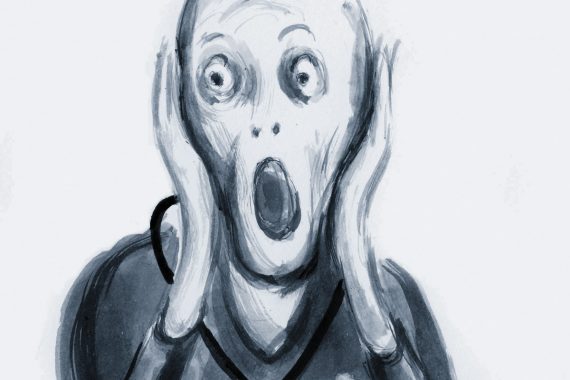


Copperfield on how the roll out of ambient voice technology will render the role of the GP obsolete
Ambient voice technology (AVT) is all around us, as the name suggests. At least, it is in the Midlands, where NHS England has procured a version of AVT for all local practices.
I’m proud to say my practice was well ahead of the curve here, being an early AVT adopter. After a torturous six-month governance and compliance process (we were that keen) we were advised we could crack on, so long as we sought explicit AVT consent from each consulting patient. Which was a pain, because that meant spending half the appointment explaining the tech and the other half reassuring them that their intimate consultation details wouldn’t be splashed all over social media.
No matter, because as well as being an early adopter, we ended up being an early rejecter – giving up on AVT when we realised that the consultations it scribed were superficially excellent but, at follow up, weirdly unrecognisable.
But we seem to be an outlier here. And AVT momentum is likely to be turbocharged by recent guidance that has – too late for us – now explicitly removed that need for explicit consent, which is ambient music to most GPs’ ears.
I don’t want to put a downer on all this excitement. But I will say that this is probably the end of the world as we know it.
Normalising AVT for both doctor and patient alike implies that AI is now a standard part of consulting. Which might seem OK, if you find it useful and timesaving, and they don’t mind or care. But where do we go from here? Ten years ago, I couldn’t have envisaged anything as magical and clever as AVT. Now, AI is moving so rapidly and pervasively that our timescale for ‘whatever next’ moments is about 10 minutes.
Except you don’t need to wonder ‘whatever next’, because doubtless you’ve figured it out. Maybe even before I end this sentence, someone will have developed a plug-in to the consultation that analyses the AVT output and suggests a differential diagnosis. And rational investigations. And evidence-based treatment. And sends the patient an information leaflet, or you a proposed MCCD if the prognosis looks dodgy. And so on.
Ultimately, this robs us of the need to think. Your role is reduced to bemused onlooker with only your soft skills and admin nous to offer, and those may be less valued than you’d hope. Yes, consultations are much messier than the average algorithm would like to admit. But AVT tends to mould that chaos into artificial order. Which may be why its outputs feel so removed from reality.
So the way things are going, it won’t be just AVT transcripts that will be unrecognisable. It’ll be the whole of general practice. Because there won’t be any GPs to recognise.
Dr Tony Copperfield is a GP in Essex
Have you got a view you want to share with Pulse?
We’re always open to first-hand pieces and opinions from GPs.
Email your piece for consideration to be published on our site.
Related Articles

READERS' COMMENTS [1]
Please note, only GPs are permitted to add comments to articles







Ultimately I have confidence in the surviving need for GP for a number of reasons that I don’t think will shift significantly over the next decade or so.
Dr M Burry, of The Big Short fame and a medical doctor to boot, suspects that the current rise of AI/LLM is showing similar hallmarks to the Dot.com bubble and the market certainly seems to be moving at an unsustainable rate. It is very likely once the true cost of business of LLM tokens and processing is factored in, we will see multiple businesses rapidly downscaling their uptake of AI models for the time being.
There will however, no doubt, be an ongoing role for them – perhaps locally hosted specific models that have an appropriate use with the necessary oversight – but I think we have yet to see where these boundaries will be drawn.
Past this, there is also the legal question to address – who gets sued when the GP/medical AI inevitably screws up? I suspect it would not be likely that an AI company would want to take on that sort of workload. We are also seeing that they remain very susceptible to hallucinations (Goblins anyone?) and are therefore likely to be having ongoing issues that we only identify further down the line – hardly likely to be encouraging.
Any LLM/AI is also only as good as the information it has access to. A good GP is going to need to be able to ask the right questions in the right way, perform the necessary examinations and order the correct investigations as part of the pathway before any assistance can be realistically expected. Never underestimate the ability of the patient to describe diarrhoea when they mean constipation and vice versa – our ability to communicate with humans in the subtext is not close to being met by AI at present.
There is also the ‘ew’ factor – patients dislike AI chatbots when they have an issue with the TV they got from Currys. I can hardly see them being overjoyed to speak to an AI doctor.
These aside, there is also the ‘outrunning the lion’ question to address. If we are thinking about which medical specialty is most at risk of being devoured by AI – I suspect it is less likely to be the one with a heavy patient-facing and firefighting role, when compared to our colleagues in histopathology or even, dare I say, diagnostic radiology – but that’s another matter.