

GPs in deprived areas hold key to reversing measles resurgence, UKHSA says
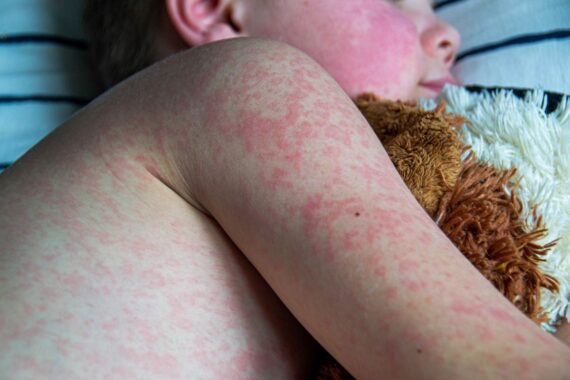


GP practices working to improve uptake of MMR vaccination in deprived areas will be key to stopping ongoing outbreaks of measles, the UK Health Security Agency (UKHSA) has said.
Speaking with Pulse, UKHSA lead consultant epidemiologist for measles Dr Vanessa Saliba said falling vaccine uptake over the past decade was really a story of inequality and GP practices in deprived areas working with communities, particularly around issues of access, would be vital.
Her comments come as the UK this week officially lost its measles elimination status – after the 2024 outbreak of almost 3,000 cases which caused officials to declare a public health incident.
Under World Health Organisation rules, sustained transmission seen over a year long period means measles is officially classes as re-established.
In 2025, England saw 957 cases suggesting that the disease was continuing to gain a foothold with ongoing pockets of transmission.
‘The key message is that in the UK, since the resurgence, cases are much driven by unvaccinated children under the age of 10,’ Dr Saliba explained.
‘The decline in uptake we’ve seen over the last 10 years is not equal and it’s very much driven by deprivation. So the burden of disease is not equally distributed.’
She stressed that uptake of vaccination was not just an issue with MMR, describing measles as the ‘canary in the coalmine’.
‘We need to work with our communities where uptake is low, and the services that serve those communities, because the evidence is that it is really an access problem.’
Last year a report from the Royal College of Paediatrics and Child Health warned that ‘stubborn barriers’ to accessing childhood vaccinations, including around booking a GP appointment, were contributing to the ‘worrying decline’ in uptake.
This month the Parliamentary health and social care committee concluded that the Government’s current vaccination strategy is ‘a failure’ and should be replaced with a new plan focusing on vaccination uptake in early years.
There are various strategies being employed to address uptake, Dr Saliba said, including understanding local population need, offering more support from health visitors to vulnerable families and in some cases catch-up programmes in schools.
But it all had to start with getting the basics right, she added.
‘Practices need to make sure that they are welcoming and make it easy to book appointments and that there are no waiting lists for your childhood vaccine clinics, that’s not acceptable.’
‘The most important thing is to make sure that you can get an appointment easily and on time, and at a time that is flexible if parents are working and I may need to do in the evening or maybe to go on a Saturday.’
Dr Saliba welcomed the increase in the item of service fee for vaccination last year in incentivising practices to resource the work.
The other factor that she hopes will make a big difference to uptake is the move to bring the second dose of MMR forward to 18 months as the chicken pox vaccine is included.
‘That is a whole new contact point for every child in the country. The recommendation was made based on evidence from London, where some boroughs had already done that some years ago, and when we looked at their uptake versus boroughs in London that did not do that, it has improved significantly.’
It will mean children getting the new MMRV immunisation will have more protection against measles at a younger age but there is also evidence that the second dose comes at a time when parents of toddlers are still engaged with the health system in general.
Commenting on the loss of measles elimination status, Professor Andrew Pollard, director of the Oxford Vaccine Group at the University of Oxford, said: ‘With thousands of cases of measles in the UK over the last few years, it was entirely expected that the UK would formally lose its measles elimination status before long.
‘To keep measles away we must sustain immunisation of over 95% of children, but we haven’t done that.
‘This moment is a miserable reflection of the state of measles vaccination in the UK and a very alarming indication of the risk to our children from this potentially fatal disease.’
Visit Pulse Reference for details on 140 symptoms, including easily searchable symptoms and categories, offering you a free platform to check symptoms and receive potential diagnoses during consultations.
Related Articles

READERS' COMMENTS [1]
Please note, only GPs are permitted to add comments to articles







Maybe GPs do hold the key, but Government and NHSE have filled the lock with rusty nails, sand, bicarbonate of soda and superglue (other permanent and irreversible adhesives are available), so what is the point of a key?