

Patients with long-term conditions urged to ask GP about flu vaccine eligibility
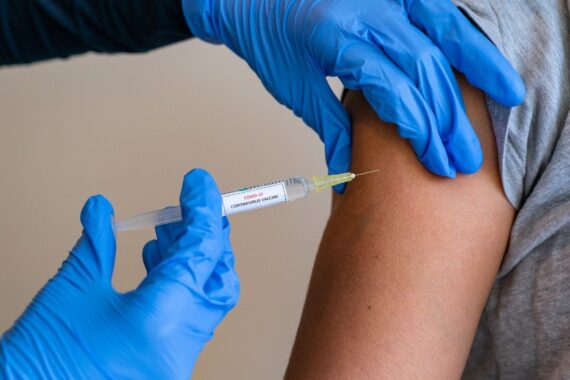


Less than a third of people with one or more long-term health conditions have had a flu vaccine, public health officials have warned, as the NHS braces itself for a difficult winter.
To date 28.9% of the under-65s in a clinical risk group have been vaccinated against flu, UK Health Security Agency (UKHSA) data shows.
The Agency is urging those with long-term conditions to check with their GP to see if they are eligible.
Last year only 40% of high-risk groups took up the offer of a vaccine.
But more over-65s have had a flu jab this season than this time last year, at 61.5%, the latest figures show.
It comes as NHS put out a ‘flu jab SOS’ for people to get vaccinated ahead of peak flu seasons.
In an alert at the end of last week, NHS England said it was making 2.4 million vaccination slots available this week.
So far more than 13 million vaccines have been delivered, the NHS said.
The flu season has got off to an unusually early start with cases three times higher than at the same point last year.
Cases are continuing to rise, particularly in children and young adults, the most up-to-date figures show.
Australia has just had its biggest ever flu season which could be a sign of what is to come for England, the NHS said. Japan has already declared a flu epidemic, with many schools needing to close.
UKHSA experts warned that the risk of death associated with flu was 48 times higher for those with chronic liver disease, 47 times higher for those with immunosuppression and 40 times more likely for those with a chronic neurological disease.
Yet a breakdown from last year shows only 34% of people with chronic liver disease got a flu vaccine, leaving over 600,000 unprotected.
For those with immunosuppression, UKHSA estimate that almost 400,000 were not vaccinated last year.
The highest uptake for flu vaccine in those in clinical risk groups was seen in 2020/21 when 53% were vaccinated.
Dr Gayatri Amirthalingam, deputy director for immunisation at UKHSA, said: ‘Every year we see many thousands of people with a long-term health condition being seriously ill in hospital from flu and tragically too many dying, when for many this could be potentially prevented by vaccination.
‘We are concerned that many people at risk may not know they are eligible.
‘Don’t wait or delay, book your vaccine appointment today, because flu is spreading now.
‘If you have a long-term health condition speak with your doctor’s surgery to find out more.
‘With flu hitting earlier this year I can’t stress enough how important it is to get yourself protected as soon as possible.’
Excess deaths from flu range from 1,000 to more than 20,000 from season to season.
In 2022/23 there were more than 15,000 excess deaths, figures from annual reports show.
Duncan Burton, chief nursing officer for England, said: ‘With just weeks left to ensure best protection against the worst of the flu season, we are issuing an urgent SOS to the eligible people who have yet to get jabbed this year.
‘It is vital that the public use the over 2.4 million available appointments we have running next week to stamp out this early wave of flu cases and help shield themselves ahead of winter, when viruses tend to circulate and the NHS faces increased pressure on its services.’
Dr Antonia Ho, clinical senior lecturer and consultant in infectious diseases, from the University of Glasgow, said: ‘Of the two seasonal influenza A viruses, the current dominant circulating virus (A/H3N2) tends to cause more severe illness than A/H1N1, particularly in older adults. For example, in 2022/23 winter season when A(H3N2) was the dominant virus, there were 16K influenza-associated deaths, compared to 8K last winter.
‘It has arrived five weeks earlier than a “normal” flu season, which means a smaller proportion of the vulnerable population may have received the flu vaccine.
‘From previous experience, influenza waves that start early tend to affect a larger number of people in the population.
‘The current circulating influenza A(H3N2) virus acquired 7 new mutations over the summer, which means the virus is quite different to the A(H3N2) strain included in this year’s vaccine (vaccine strains are selected in February for the Northern hemisphere winter season). It also means that the virus could have changed sufficiently to escape the immunity that have been built up from previous infections and vaccinations.
‘The R (reproduction) number is thought to have increased from 1.2 to 1.4, which means it is more transmissible. I.e. 100 people infected with this strain of flu can infect 140 people (rather than 110 to 120 people in other flu seasons).’
Prof Adam Finn, professor of paediatrics at the University of Bristol, said: ‘When a completely novel strain of flu that can spread between people arrives against which no one has immunity, we call it a pandemic, and very large waves of infection occur at any time of the year.
‘But sometimes a new strain develops that isn’t entirely new but sufficiently new to enable it to spread more efficiently because our immunity from previous infections and vaccinations is not that well matched.
‘This is what may be happening this year as one of the strains of influenza A that we are familiar with – called H3N2 – seems to have acquired several new mutations over the summer and is responsible for many of the flu cases showing up now.
‘The other reason why the early start of this year’s flu epidemic is a worry is that there has not been enough time yet for a lot of people to get vaccinated. The children’s programme kicked off in September and the adult programme in October. Usually, November is a month when a lot of people get the vaccine before the infections start to spread in December and January.
‘Even though this new strain of H3N2 has arrived and it is different from the H3N2 strain in this year’s vaccines, they should provide some degree of protection against this strain and certainly against the other flu strains that may be coming through as the winter goes on.
‘The bottom line is that it’s looking possible that we may be facing a very bad flu season this year and the best thing we can all do right now to tackle the problem is to get vaccinated.’
Visit Pulse Reference for details on 140 symptoms, including easily searchable symptoms and categories, offering you a free platform to check symptoms and receive potential diagnoses during consultations.
Related Articles

READERS' COMMENTS [2]
Please note, only GPs are permitted to add comments to articles







Why would patients need ti ask their GP about eligibility?
Are the criteria so completely confusing that patients cannot work it out for themselves?
What went wrong with the public-facing flu-jab campaign materials?
They misinform who can have one and wherefrom?
Or people have so much lost faith in the PH dept through the farces enacted over recent pandemics of infectious disease, that they are not taking up the offer to be able to pay privately to get what was given free in previous years in a well-organised fashion by GPs, but is now so difficult to turn up at right place at right time for the NHS-organised farce that they are opting to pay or go without, and not even considering having the free jabs?
If you are going to have competition and allow every man and his dog provide flu jabs, then you shouldn’t direct the complex ones to GPs or expect GPs to take any responsibility for ensuring good uptake.
The whole process was simpler, better and had more coverage when GPs provided flu jabs. They had a responsibility to make sure people were jabbed. They had ones which were expensive (like a home visit) and the costs of that were subsides by the cheaper ones. Perhaps the idea of spreading the service thinly need to be re-considered.