
Free structured exercise programme shown to cut GP attendance
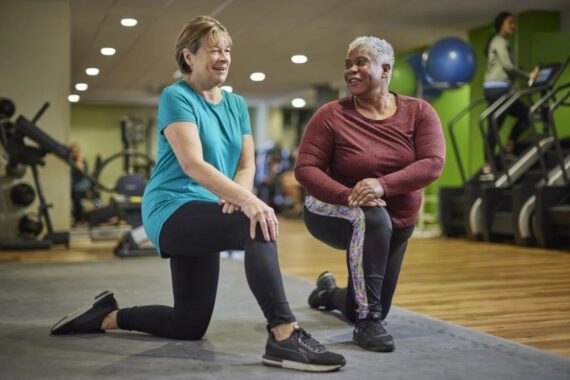


Embedding free structured exercise programmes into NHS care would have significant economic and social value, an analysis has suggested.
An evaluation of a joint pain programme developed by Nuffield Health found that if expanded across Greater Manchester alone it could generate £11m of savings for the NHS.
The report from Manchester Metropolitan University (MMU) and Nuffield Health also said wider adoption of the programme could prevent 250,000 GP appointments in the region.
The analysis concluded that rolling the scheme out across the Greater Manchester region would provide £1.7bn in social value measured in reduced pressure on NHS services, people returning to work, and improved quality of life.
Nuffield Health has plans to extend the free structured exercise classes to people around the country living with a broader range of long-term health conditions – including people living with cardiovascular, metabolic and respiratory disease.
In all 50,000 free places will be offered nationwide each year by 2027, it said.
The evaluation by researchers at MMU is based on feedback from more than 12,000 people with musculoskeletal conditions who took part in the joint pain programme at 110 centres around the country in 2024.
Most participants reported a significant improvement in their pain levels and quality of life, with an estimated 86,000 fewer sick days taken and 31,000 GP appointments avoided over the year.
The authors noted that many people who live with musculoskeletal conditions such as arthritis, osteoporosis and back pain do not have care plan.
Professor Tim Cable, director of the Institute of Sport at Manchester Metropolitan University, said: ‘Our analysis shows the huge potential of structured exercise to transform how we manage and treat long-term conditions.
‘Greater Manchester can lead the way and our research partnership with Nuffield Health aims to build on the successes of these existing programmes to support people living with a much wider range of conditions.
‘If scaled, the benefits could be enormous: improving lives, reducing demand on the NHS, and unlocking billions more in social and economic value.’
GPs and physiotherapists are being encouraged to refer eligible patients to the programme and ‘champion exercise as a safe, effective treatment’ for people living with long-term conditions.
Davina Deniszczyc, charity and medical director at Nuffield Health, said: ‘Exercise is one of the most powerful forms of medicine we have – if it was a pill then everyone would take it. Unfortunately, it’s under prescribed – and we need to change that.’
Visit Pulse Reference for details on 140 symptoms, including easily searchable symptoms and categories, offering you a free platform to check symptoms and receive potential diagnoses during consultations.