

Switching children’s medication from liquids to pills could save £40k a year, researchers say
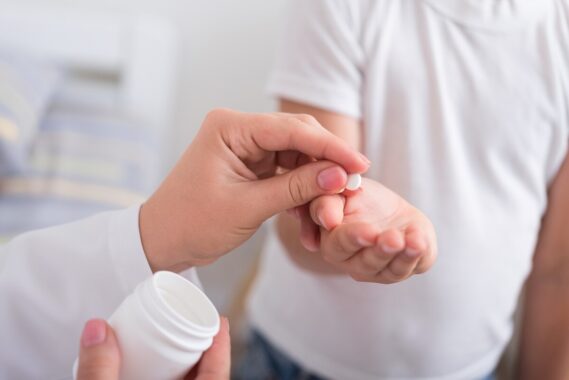


Switching children and young people’s medication from liquids to pills can ‘transform their lives’ and save thousands of pounds for the NHS at the same time, researchers have argued.
A new project underway at Great Ormond Street Hospital (GOSH) has found that switching patients to pills or tablets could save ‘up to £40,000 per year per patient for some drugs’.
The endocrinology team argued that many children and young people are prescribed liquid formulations of medicines despite children aged four and over being able to safely learn how to swallow tablets.
The researchers identified 19 patients with the rare condition congenital hyperinsulinism (CHI) who could benefit from the medicine switch.
CHI affects around one in every 30,000-40,000 children and results in high levels of insulin being produced. Children must take Diazoxide multiple times a day depending on insulin and glucose levels, which until now was normally given as a liquid.
In the project, the team switched all 19 patients – all of whom were seven or older – from liquid diazoxide to a pill form of the drug which delivers the same therapeutic benefit.
Patients were monitored to ensure their blood glucose levels remained stable and asked about how the switch in medication format had impacted them.
On top of the benefits for patients and better taste, the diazoxide tablets cost significantly less than its liquid counterpart, the researchers said.
They said: ‘The tablets cost £1.15 per 50mg, while the liquid costs over ten times more at £15.50 per 50mg. This equates to a saving of approximately £40,000 per patient per year.’
The team said that liquid medication often needs to be drawn up in a syringe for each dose, meaning that children and their families have to ‘fit their lives around administering’ the doses multiple times a day, while moving to tablets gave children ‘new independence’ with their condition, making a positive impact on their lives.
The project, which began in early 2025, has seen all 19 patients permanently switched to the tablet form with no negative effects on their blood glucose levels, the team said.
The team are now looking at moving younger patients on to the diazoxide tablets which will expand the numbers of patients who make the switch and increase the cost savings.
Clinical nurse specialist Kate Morgan, who led the project, said: ‘We knew the potential this trial had for savings, but the scale of the quality-of-life improvements for children and their families we are seeing is something we didn’t anticipate.
‘Children are so much more than their diagnoses – they have full lives and families and their illnesses affects everyone, so it is very important we do all we can to make simple, positive changes that impact everyone for the better.’
Consultant of paediatric endocrinology and diabetes Dr Antonia Dastamani, who also led the project, said: ‘It is common practice to ask patients how they’re finding treatment, or how they feel when they have injections, but we never thought to ask patients about the taste of medicines and whether they like them.
‘This has shed a light on key questions we now want to ask children and young people about their care and treatment so they can be more involved and have more independence in their lives.’
Last month, a leading GP argued that for many children tablets ‘are not only possible, but preferable’, reducing cost, providing a more accurate dose and often easier for parents to manage.
Visit Pulse Reference for details on 140 symptoms, including easily searchable symptoms and categories, offering you a free platform to check symptoms and receive potential diagnoses during consultations.
Related Articles

READERS' COMMENTS [1]
Please note, only GPs are permitted to add comments to articles







Great idea!
One for practice pharmacists.