

One in three parents think antibiotics are always needed for ear infection
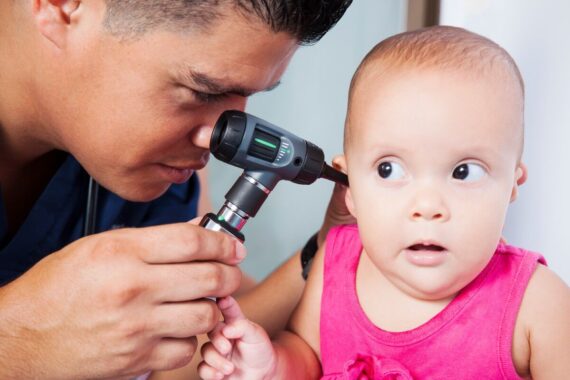


One in three parents believe that children always need antibiotics for an ear infection, a study done by the UK Health Security Agency (UKHSA) has found.
The online survey of 503 parents of children under the age of 10 years who had suspected ear infection symptoms in the past 12 months found only 49% believed the condition could get better on its own.
Reporting the findings in BJGP Open, UKHSA said most parents perceived their child’s symptoms as mild (25.8%) or moderate (64.6%).
Three-quarters had consulted a healthcare professional within one to two days, the research found.
The researchers noted that ear infections often get better on their own within three days, although sometimes symptoms can last up to a week.
And as few as one in five children are likely to require antibiotics to treat an ear infection.
UKHSA said the study was part of ongoing work to identify opportunities to help reduce avoidable antibiotic use.
In all 36% said an ear infection should always be treated with antibiotics and 27% were unsure.
Survey responses also showed a gap in expectation between what they wanted from a consultation with a healthcare professional and what they got.
Significantly more parents expected advice on whether their child needed antibiotics (43%) than actually received it (28%).
Of those who consulted a healthcare professional, 56% reported their child was prescribed antibiotics.
Over two-fifths of parents had to take time off work, whilst nearly two-thirds said their child missed school or nursery.
UKHSA reported that work pressures appeared to influence consulting behaviour, with parents who missed work nearly five times more likely to seek medical help.
Lead author Catherine Hayes, from the UKHSA Primary Care and Interventions Unit, said: ‘Ear infections are very common and can cause real distress to both children and families, but antibiotics are often not necessary.
‘Our survey highlights that more can be done to support parents to understand when an ear infection is serious and what they can do.’
She added that UKHSA was developing resources to support health professionals and patients during consultations.
Dr Haroon Ahmed, co-author and a GP and clinical reader in epidemiology at Cardiff University, said advice was available on the NHS website if children had symptoms of an ear infection.
‘If prescribed antibiotics, it’s important to ensure they are taken exactly as directed by your GP, nurse or pharmacist.’
The number of antibiotic-resistant infections is rising in England, amidst changing patterns of prescribing, a report from UKHSA said last year.
An average of 400 new resistant infections were reported a day in 2024, the English Surveillance of Antibiotic Prescribing and Utilisation Report (ESPAUR).
Antibiotic use in the NHS is 2% below 2019 pre-pandemic levels with GPs issuing 1.2 million fewer antibiotic prescriptions between April 2024 to March 2025 than the previous 12 months.
Visit Pulse Reference for details on 140 symptoms, including easily searchable symptoms and categories, offering you a free platform to check symptoms and receive potential diagnoses during consultations.
Related Articles

READERS' COMMENTS [2]
Please note, only GPs are permitted to add comments to articles







Beats the two in three GPs and pharmacists, and three in three urgent care departments that think so.
And more than 1 in 3 repiratory patients who KNOW every cold requires antibiotics because the specialist has told them so, even if it was only the pre-op nurse check or the anaesthetic assistant.