

NHS England considering self-testing routes for cholesterol and prostate cancer
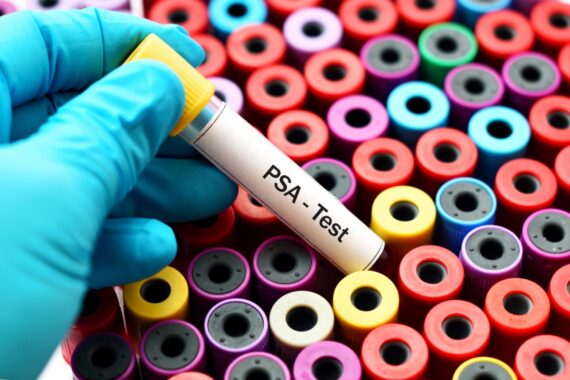


Patients could be asked to test at home for prostate-specific antigen (PSA) and cholesterol levels – among other tests usually carried out in general practice – by the next financial year.
NHS England has put out ‘request for information’ and market engagement documents for the Home Test programme, which would establish home testing integrated into the NHS App – also including for sexual health, gastroenterology and liver screening.
NHSE said that the programme is seeking to explore the ‘feasibility’ of establishing a ‘single, trusted national home testing capability’ that will enable patients to order, complete and receive results from ‘clinically validated diagnostic tests’ from home, integrated into the NHS App and ‘aligned’ with national screening, monitoring, treatment and prevention ambitions.
GP leaders told Pulse that NHS-supported home testing may be ‘appropriate’ in some cases, but that without the right support, there is a risk of patients receiving ‘unclear or misleading results’, which can cause ‘unnecessary anxiety’ or lead to further avoidable demand on GP services.
The NHSE documents point out that this engagement is ‘exploratory’ and that NHS England has not yet determined the ‘operating model’ for national home testing including whether services will be managed nationally, commissioned locally or a combination of both.
It added that supplier responses will ‘directly inform’ that analysis and any recommendation made, and that there is ‘no pre-determined outcome’.
The programme team will then present a recommendation for the future design and operating model for HomeTest to relevant NHS and DHSC colleagues for approval.
NHSE said that wants the service to be operational by 2027/28, ‘pending feasibility recommendations and ministerial sign off’.
One market engagement document indicated that the ‘initial focus’ of the Home Test programme would be on the patient self-sampling and processing of analytes in the following specialties:
- sexual health: HIV; hepatitis C;
- gastroenterology: faecal calprotectin (FCP), coeliac, ferritin, urea and electrolytes (U&E)
- urology: total prostate specific antigen (tPSA)
- gynaecology: follicle-stimulating hormone (FSH); human papillomavirus (HPV); 4th generation STI screen panel; urine dip test; urine culture; glycated haemoglobin (HbA1c)
- orthopaedics: methicillin-resistant staphylococcus aureus (MRSA)
- rheumatology: full blood count (FBC); liver function tests (LFTs); creatinine; C-reactive protein (CRP); erythrocyte sedimentation rate (ESR)
- primary care: estimated glomerular filtration rate (eGFR), Cholesterol Level, Serum Creatinine, Urinary Albumin
RCGP president Professor Victoria Tzortziou Brown said that it is ‘essential’ that any expansion of home testing is ‘firmly evidence-based and clinically validated’.
She said: ‘We know that improving access to testing can help patients better manage their health, and in some cases NHS-supported home testing may be appropriate and convenient, particularly where it has been shown to be safe, accurate and supported by clear clinical guidance.
‘However, it’s essential that any expansion of home testing is firmly evidence-based and clinically validated. It must also be carefully targeted and include appropriate clinical oversight and follow-up.’
She also argued that ‘not all tests are suitable to be carried out at home, and without the right support, there is a risk of patients receiving unclear or misleading results, which can cause unnecessary anxiety or lead to further avoidable demand on GP services’.
‘General practice is already under significant workload and workforce pressure, so it’s essential that any new testing initiatives are properly resourced and designed to complement, rather than add to, existing pressures,’ she said.
Professor Azeem Majeed, a GP and head of the Department of Primary Care & Public Health at Imperial College London, pointed out that the documents suggest that the tests won’t be at the ‘point of care’, and that it is likely that the tests will be part of their planned care, rather than tests that patients can just order themselves.
He said: ‘An important task for general practices will be the need to manage incoming results and arrange appropriate follow-up care.
‘Patients will receive their results through the NHS App, while clinicians will need confidence that results are transferred automatically, accurately and promptly into the patient’s medical record.
‘The impact of the service should be monitored closely, including patterns of uptake among different patient groups.
‘Some patients do not use the NHS App and others may not feel confident carrying out their own blood tests. Although home testing could offer important benefits for both patients and the NHS, robust evaluation will be needed to ensure that it improves access equitably and it is cost-effective.’
The Government’s 10-year plan for health announced expansions of the NHS App, including the addition of an AI-enabled ‘My NHS GP’ tool – defined as a ‘doctor in the pocket of every patient’.
And NHS England has said that the NHS App should become the ‘default option’ for GP practices to contact patients starting from this financial year.
Visit Pulse Reference for details on 140 symptoms, including easily searchable symptoms and categories, offering you a free platform to check symptoms and receive potential diagnoses during consultations.
Related Articles

READERS' COMMENTS [3]
Please note, only GPs are permitted to add comments to articles







Potentially a disaster waiting to happen
Load up another bag of sh*te onto GPs backs. It’s the best way to break them…
As a GP, I am not allowed to order an ESR test, and yet any old patient (or worried young one) will be able to do it as often as they feel like from next April then?