

First-year doctors back strike action over GP unemployment crisis
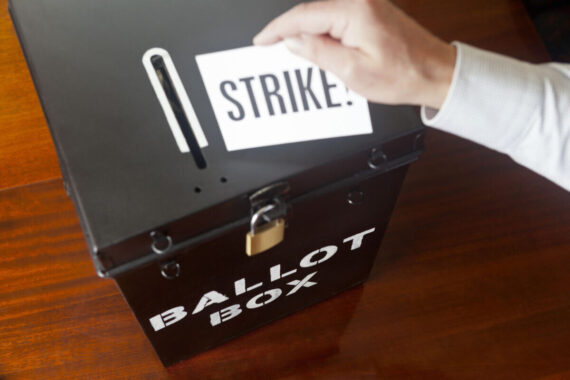


First-year doctors have overwhelmingly voted to support strike action as a tool to make the Government solve the GP unemployment crisis.
In all, 97% of first-year resident doctors (FY1s) voted in support of strike action on a 65% turnout in a BMA ballot which closed yesterday.
This provides a ‘mandate for industrial action’ alongside an ongoing pay dispute, according to the BMA’s resident doctors committee.
While strike action over this issue is not imminent, the ballot results show negotiations with the Government must now produce a solution on employment alongside the ‘pay erosion’ experience by resident doctors, the BMA said.
Resident doctors in England, including GP registrars, took industrial action in July over the bid to restore pay to pre-2008 levels, with an additional linked dispute regarding the doctor unemployment crisis launched at the same time.
Dr Jack Fletcher, newly-elected RDC chair, said: ‘By putting these two disputes – pay and jobs – together, we are now giving Government a chance to create a plan that supports and develops the workforce of the next generation.
‘Patients need doctors to have jobs. Doctors need to know they will have jobs. And they need to know they will be paid what they’re worth.
‘We do not want to have to strike, but we will if we are left with no choice. The Government has the power to end both of these disputes now: it must use this opportunity to make the changes that are desperately needed.’
According to the BMA, more than 30,000 doctors applied for just over 10,000 specialty training places this year.
A survey from the union in July revealed that half (52%) of doctors finishing their foundation training in the summer had no ‘substantive employment or regular locum work’ secured for August.
And last month, newly-released NHS England statistics revealed competition for GP specialty training posts has reached a record high, with five doctors vying for every available place in England.
Dr Fletcher said: ‘Doctors have spoken clearly: they won’t accept that they face a career of insecurity at a time when the demand for doctors is huge.
‘Yet successive governments have been unable to embrace the changes both doctors and patients are crying out for.
‘GP unemployment is getting worse with five doctors applying for every GP training post, yet patient demand for appointments continues to increase.
‘It makes no sense that despite the need to bring down waiting lists and increase capacity for patients to be seen, thousands of willing and skilled doctors are unable to find the work to begin treating them.
Dr Fletcher also criticised the NHS 10-year plan’s ‘paltry’ offering of 1,000 extra specialty training places over three years.
In response, primary care minister Stephen Kinnock said strike action in response to this would be ‘needless and counterproductive’.
Mr Kinnock said: ‘It risks setting back the progress we are already making on rebuilding the NHS and improving the training experience for resident doctors.
‘I would urge the BMA and their new leadership to continue to work with the government, rather than opting for more damaging strikes, which will harm patients, doctors themselves and the NHS as a whole.’
The DHSC said secretary of state Wes Streeting will be meeting with the new BMA RDC leadership next week (13 October) and will discuss these concerns with the new leadership.
Full results of the BMA strike action ballot
Q: Are you prepared to take part in strike action?
Yes: 3,950 (97.36%)
No: 107 (2.64%)
Individuals entitled to vote in the ballot: 6,243
Number of votes cast in the ballot: 4,057
Votes cast in the ballot as a % of individuals who were entitled to vote: 64.98%
Spoilt or otherwise invalid voting papers returned: 0
Source: BMA
Related Articles



Most





IMPORTANT LINKS
MORE FROM COGORA
© Cogora 2026
Cogora Limited. 1 Giltspur Street, London EC1A
9DD Registered in the United Kingdom. Reg. No. 2147432
