

‘No reason’ GPs can’t lead new integrated health organisations, says Streeting
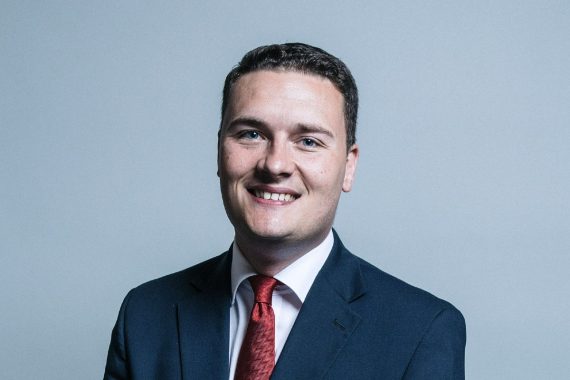


Health secretary Wes Streeting has said there is ‘no reason’ GPs could not lead newly-announced Integrated Health Organisations (IHOs).
His comments were made as the Government revealed an initial list of eight ‘advanced foundation trusts‘ who will be among the first to take on the new IHO contracts from next year.
Under the plans, the IHOs will hold the whole health budget ‘for a defined population’, with more contracts to be awarded when the model officially goes live in 2027.
Speaking at the NHS Providers conference in Manchester yesterday, the health secretary said any NHS trust can become an IHO, arguing they will reverse the ‘disincentive’ to invest in measures to prevent unnecessary hospital admissions.
But despite them being hospitals, Mr Streeting said this didn’t mean GPs could not run them.
The health secretary clarified: ‘There is no reason, by the way, they couldn’t be led by primary care professionals. In fact, one of the two trusts currently under consideration for IHO status is a Community Trust – and that diversity will continue.
‘If a nurse is best placed to lead a community service, a GP best placed to lead a hospital or an acute Trust best placed to lead Neighbourhood Health Services, well then that’s what they’ll do.’
Mr Streeting also talked up the single- and multi-neighbourhood provider contracts first trailed in the NHS 10-year health plan, published earlier this year.
He hailed the new provider contracts as ‘taking the best of the NHS to the rest of the NHS’.
‘A single neighbourhood provider contract for the delivery of enhanced services, for patients, through expert, multi-disciplinary teams, and a multi-neighbourhood provider contract to lead the Neighbourhood Health Service at scale.
‘Pooling resources and expertise will deliver better services over larger areas, like frailty or end-of-life care, and deliver a more efficient back office so more of GPs time is spent with patients.’
Also in the health secretary’s speech, he thanked GP practices who had implemented the controversial online access changes which have been contractually mandated since 1 October.
Mr Streeting said: ‘Online access to GP practices should stem the tide of the four million patients who go to A&E each year because they can’t get through to their local surgery. So thank you to all of those GPS who have successfully introduced this new system. You’ll be crucial in unclogging emergency departments, freeing up beds and saving lives this winter.’
But his comments come as a recent Pulse survey suggested practices are spending time equivalent to more than 200,000 appointments a week implementing the changes – increasing waiting times for patients and working hours for staff as a result.
The BMA is currently in dispute with the Government over the contract changes.
In his speech, which took place as the BMA’s resident doctors’ committee’s latest strike is due this week, the health secretary took aim at the union, calling it ‘cartel-like’.
Mr Streeting said: ‘It’s time for the BMA to get real. We’re not going to be held to ransom. We are going to plough on regardless.
‘I think it’s become increasingly clear that the BMA is no longer a professional voice for doctors.
‘They are increasingly behaving in cartel-like behaviour, and they threaten not just the recovery of the NHS under this government. They threaten the future of the NHS full stop, and I think that is a morally reprehensible position to be in.’
A BMA spokesperson said: ‘The BMA is advocating effectively for doctors to find a solution which gets doctors into jobs so that they can see patients and reverses lost pay so that it keeps them in the workforce now and in the future.
‘The Secretary of State should recognise the importance of demonstrating that the Government values the NHS workforce, not blaming them for taking action when their pay’s value remains a fifth below where it was in 2008, and doctors struggle to find work even as patients wait many months to see a doctor.
‘There will be a way to end this dispute, and like any professional association and trade union, we are first and foremost interested in getting back around the table with Government to negotiate properly and reach a solution on both jobs and pay for the benefit of all.’
Related Articles

READERS' COMMENTS [3]
Please note, only GPs are permitted to add comments to articles







No reason they can’t, but also no reason they will be!
Snouts in the trough time
A turncoat will always surface