

GPs reminded to specify hazardous implants in death certificates to avoid delays
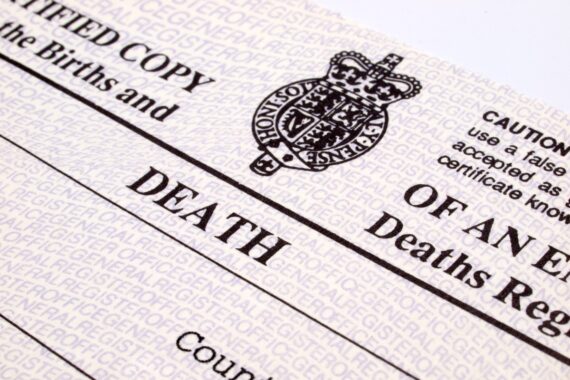


GPs have been reminded to specify hazardous implants when completing death certificates to avoid delaying burial and cremation services.
Doncaster LMC said it had been told about ‘several recent cases’ where a medical certificate cause of death (MCCD) stated an ‘implant’ was present without specifying if it was hazardous or not.
This has led to crematoria and funeral directors being unable to determine whether the device posed a risk, creating an ‘avoidable’ delay to services, the LMC said.
The LMC said that when completing a MCCD, it is ‘a legal and safety requirement’ that any hazardous implantable device ‘must be clearly identified’, including what the device is and where it is located.
Guidance from the Department of Health and Social Care stated that ‘hazardous’ devices include pacemakers, implantable cardioverter defibrillators, radioactive implants and intrathecal pumps. Non-hazardous implants include hip or knee replacements.
If not recorded, hazardous implants ‘may damage cremation equipment and/or cause harm to crematorium staff if not removed from the body of the deceased before cremation’.
Potentially hazardous implantable medical devices
Implants that could cause issues during a cremation include but are not limited to:
- Pacemakers;
- Implantable cardioverter defibrillators;
- Cardiac resynchronization therapy devices (CRTDs);
- Implantable loop recorders;
- Ventricular assist devices (VADs):
left ventricular assist devices (LVADs)
right ventricular assist devices (RVADs)
biventricular assist devices (BiVADs)
- Implantable drug pumps including intrathecal pumps;
- Neurostimulators (including for pain and functional electrical stimulation);
- Bone growth stimulators;
- Fixion nails;
- Any other battery powered or pressurised implant;
- Radioactive implants used to treat tumours, such as metal wires, seeds or tubes;
- Radiopharmaceutical treatment (via injection).
Source: DHSC
In an update to GPs, Doncaster LMC said: ‘In several recent cases, the MCCD simply stated that an “implant” was present. Without further detail, crematoria and funeral directors were unable to determine whether the device posed a risk.
‘This resulted in enquiries being escalated to the Medical Examiner’s Office, who then had to review clinical records to identify the device. These delays are avoidable and place unnecessary pressure on bereavement teams.
‘Accurate documentation protects staff, prevents delays for families, and ensures compliance with cremation regulations.’
An MCCD includes a section on ‘implantable medical devices’ for the attending practitioner to complete, but they only need to complete this ‘if there is a hazardous device in the body of the deceased person’ and if so, ‘the type of device and whether it has been removed’, the DHSC guidance said.
Leicester, Leicestershire and Rutland (LLR) LMC chief executive Dr Grant Ingrams, who wrote a guide to the medical examiner system in Pulse, told Pulse that the issue arises because medical examiners may only have partial access to the patient’s record.
He also reiterated previous concerns around the process, including a transfer of unfunded workload to general practice.
Dr Ingrams said: ‘The patient might have had a pacemaker put in when they were visiting somewhere else or even abroad. So if that [section] has been left blank, and relatives have mentioned something, then they have to go back to GP.
‘The problem is that [some implants] can explode and cause an awful lot of damage, if they’re not removed beforehand.
‘It’s not an unreasonable ask, and it’s one of those things where the GP is in the best position to do it.
‘The only thing is that when it used to be part of the cremation form, you always felt you were getting paid to actually do that work looking for it and filling it in. From the beginning we have said that the new medical examiner system transfers unfunded work to general practice.’
Pulse has contacted the Royal College of Pathologists (the national professional body for medical examiners) to comment.





