
Behçet’s disease – what it is and how to spot it
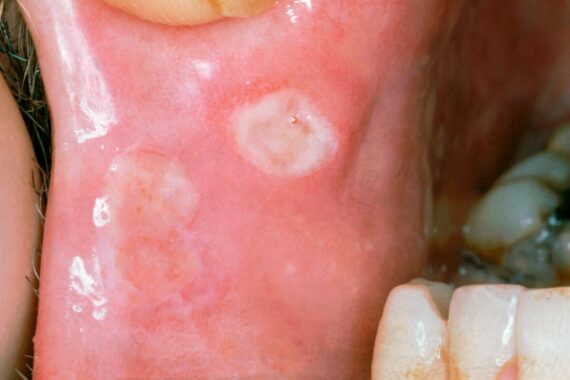


Under the radar: Continuing our series on diagnoses that may be overlooked in primary care, Dr Belinda Solomon describes how a case of Behçet’s disease was picked up in her clinic and explains how to recognise and manage this unusual condition
Permission has been granted to share details of the case
Clinical history
A 52-year-old female patient was referred to community gynaecology with a history of recurrent painful genital ulcers. They would occur every 6 months without a prodrome and spontaneously resolve over 7 to 10 days. She had a regular male partner and no recent change in sexual partner.
She had a history of oral ulcers since childhood.
Past medical history included HLA-B27 positive and ankylosing spondylitis.
Swabs for bacteria and herpes virus were repeatedly negative.
On review of her medical history, she had previously seen a dermatologist for a persistent rash on her neck, thought to be dermatitis on biopsy.
However, the differential was broad, including lichen planus and connective tissue disease.
The dermatologist had noted the history of recurrent genital ulcers and recommended a biopsy when symptomatic; however, this had been challenging to arrange with the local hospital. She came to the GP requesting a referral for biopsy and a diagnosis.
On examination the vulval anatomy was normal and a small shallow ulcer was noted and biopsied.
Histology showed a small vessel vasculitis, with Behçet’s disease as a very important consideration. Stains for microorganisms were negative and immunohistochemistry for herpes simplex virus 1, Epstein-Barr virus and Treponema pallidum were negative. There was no evidence of malignancy.
She was referred to a national Behçet’s centre in London for further evaluation, and a diagnosis of Behçet’s disease was confirmed.
What is Behçet’s disease?
Behçet’s disease is a rare multi-system chronic inflammatory condition affecting any organ in the body, due to systemic vasculitis and inflammation of unknown cause. It occurs worldwide but is most prevalent in Turkey and Japan followed by Korea, China, Iran, Iraq and Saudia Arabia. Around 20% will present in childhood.
Behçet’s is rare in the UK and typically presents with the following:
- Recurrent genital ulcers.
- Recurrent oral ulcers.
- Uveitis.
- Arthritis or arthralgia.
- Skin manifestations such as erythema nodosum.
Vascular and neurological symptoms are rare but may cause thrombophlebitis commonly in lower leg veins, thrombosis dural sinuses of the brain and arteritis causing aneurysms.
Diagnosis
Diagnosis is challenging as patients present with a variety of symptoms over many years at different stages of life, and there is no single diagnostic test.
The criteria for diagnosis set out by an international study group in 1990 are:
- At least three episodes of mouth ulcers in the previous 12 months and at least two of the following symptoms:
- Recurrent genital ulcers.
- Eye involvement – uveitis or retinal.
- Skin lesions – erythema nodosum, pseudofolliculitis or papulopustular lesions, acneiform nodules.
- Positive pathergy test – skin pricking with sterile needle resulting in formation of pustule at the test site after 24-48 hours.
Examples of mouth ulcers (image 1), papulopustular lesions (image 2) and erythema nodosum (image 3) seen in Behçet’s disease are shown in the images below.
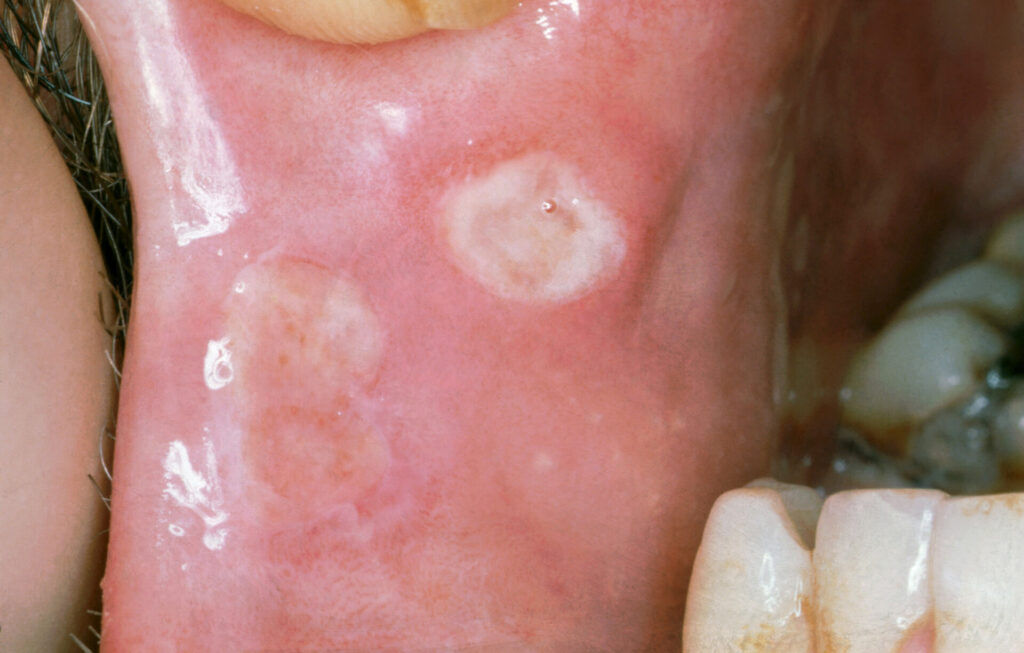
Image 1. Oral aphthous ulcers in Behçet’s disease
Treatment and prognosis
Treatment is tailored to each individual and their symptoms with the aim of improving quality of life and preventing end-organ damage. Patients require an MDT approach and often involving multiple specialists to manage specific complications, such as rheumatology, ophthalmology, oral medicine, dermatology and neurology.
Management of oral and genital ulcers includes good oral hygiene and topical analgesia.
First line treatment with steroid based mouthwash is helpful; several topical corticosteroids can be dissolved in water – such as betamethasone 500mcg soluble tablet or prednisolone 5mg soluble tablet – to create an off-label mouthwash, gargled for 2-4 minutes, 3-4 times daily.
Oral colchicine tablets are second-line to reduce frequency and severity of ulcers, but can take 4-6 months to provide benefit.
Systemic treatments for resistant ulcers or patients with moderate to severe ocular, vascular (including thromboses), gastrointestinal or neurological involvement include oral corticosteroids, immunosuppressants and biologic agents.
Behçet’s is typically a relapsing-remitting condition and prognosis depends on the organ systems affected.
Mortality is low, but patients with neurological, vascular and gastrointestinal involvement have increased mortality. Ophthalmic involvement is a major cause of morbidity due to loss of vision, requiring aggressive treatment.
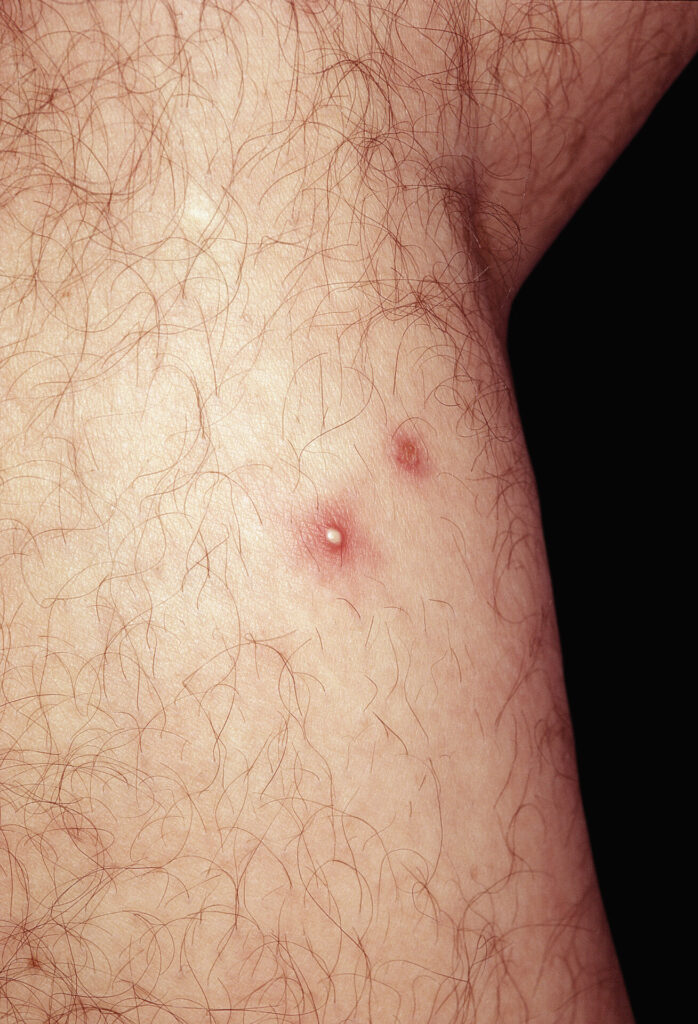
Image 2. Papulopustular eruption in Behçet’s disease
Learning points for GPs
- Although rare, Behçet’s disease has significant systemic complications and subsequent morbidity requiring long-term management and support, so it is important to consider and refer for diagnosis once suspected.
- Consider referral to dermatology or oral medicine in patients with undiagnosed recurrent genital or oral ulcers particularly when repeated viral swabs and baseline investigations are normal.
- Have a higher index of suspicion if there have also been skin issues, previous uveitis or inflammatory eye conditions in addition to oral or genital ulcers.
- In this case a vulval biopsy and histological assessment was able to exclude a wide range of infections and provide important diagnostic clues resulting in appropriate referral. The National Behçet’s Centres of Excellence in London, Birmingham and Liverpool accept referrals for suspected or probable Behçet’s as well as those with confirmed disease.
- Simple treatments for oral and genital ulcers can be initiated in primary care to manage symptoms. The Primary Care Dermatology Society provides helpful treatment guidelines.

Image 3. Erythema nodosum, seen in Behçet’s disease
Dr Belinda Solomon is a GPwER in gynaecology and works at the Gynaecology Collaborative, Islington GP Federation
Further reading and patient resources
- Behçet’s UK. Behçet’s medical factsheets.
- British Association of Dermatologists. Behçet’s patient information leaflet. 2024
- DermNet. Behçet’s disease.
- International Study Group for Behçet’s Disease. Criteria for diagnosis of Behçet’s disease. Lancet 1990;335(8697):1078-80
- NHS UK. Behçet’s disease.
- Primary Care Dermatology Society. Clinical guidelines – oral lesions.
Visit Pulse Reference for details on 140 symptoms, including easily searchable symptoms and categories, offering you a free platform to check symptoms and receive potential diagnoses during consultations.