

GPs ‘disappointed’ by NHSE decision to commission Men B vaccine from pharmacies
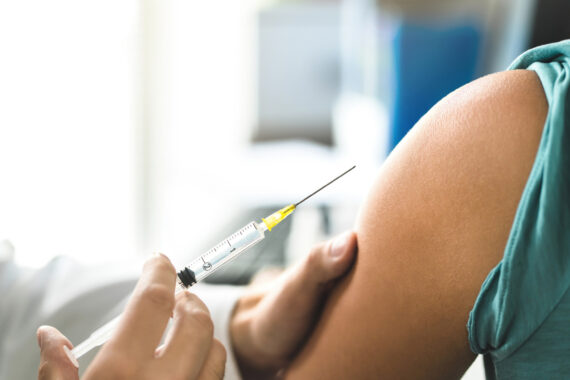


GP leaders have criticised NHS England’s decision to commission a ‘one-off’ national Meningococcal B (Men B) vaccination programme to be carried out by community pharmacies only.
The programme, which will begin on 20 July, has been commissioned to provide Men B vaccination to 17- and 18-year-olds and to people who are starting undergraduate higher education or moving into further education accommodation or halls of residence for the first time in the autumn.
Pharmacies choosing to provide the service will receive £10.06 per vaccine administered, and will also be eligible for:
- £300 once at least one vaccination has been administered;
- £400 if 100 or more vaccinations are administered by the end of March 2027 (i.e. up to £700 in total).
In a letter, NHS England and UK Health Security Agency said: ‘The aim is to vaccinate individuals before the start of the 2026/2027 academic year and the peak season for MenB in autumn 2026.
‘Those entering university for the first time and who are under the age of 25 are considered at highest risk from MenB disease. Community pharmacies will be commissioned to deliver this one-off programme.
‘As two doses of the Bexsero (4CMenB) vaccine are required for protection, it is important to start offering vaccination as soon as is practicably possible.’
The BMA’s GP committee said that the commissioner did not provide an option to sign up for the programme to general practice, despite the ‘efforts and hard work’ of practices in Kent during the recent outbreak.
The GPC said: ‘We were disappointed by NHS England’s decision to commission a time-limited Men B vaccination programme for adolescents from community pharmacy providers, without providing an option to sign up for general practice.
‘This is despite the efforts and hard work of local GPs to provide vaccination and treatment during the recent outbreak in Kent.
‘Following this, and the recent extension of childhood flu vaccination for community pharmacy, we have written to NHS England and the Department of Health to raise our concerns with the strategic direction of vaccination services in England, and reaffirm the critical central role of general practice in vaccination services and protecting the nation’s health across the population.’
It comes after the primary care minister said that the Government is planning to ‘ease pressure on GPs’ by expanding the use of pharmacists’ clinical skills.
The Doctors’ Association GP spokesperson Dr Steve Taylor told Pulse that when it comes to vaccination programmes it is ‘really important’ to have a ‘collaborative approach’ rather than separate commissioning.
He said: ‘The problem with commissioning the vaccines to pharmacies isn’t that they aren’t able to support the programmes, it’s the fact that in most cases the same cohort of willing people would get vaccinated in both GP practices and pharmacies.
‘This in effect means funding is then split. What’s more important is targeting the group who wouldn’t normally get vaccinated.’
Speaking at the Community Pharmacy and General Practice conference on Sunday, former BMA GP leader and RCGP president Dr Richard Vautrey also stressed the issue.
He told the audience of GPs and pharmacists: ‘One of the things that the Government needs to do is build collaboration and support. My concern is the recent decision around meningitis B to just feed a pharmacy delivered scheme rather than your practice scheme works against that.
‘We have to collaboratively challenge government when they do that, when they make those decisions, to say that isn’t going to work for our patients and for the collaboration of our primary care colleagues. We do need to see people working together, not being pushed apart through contractual changes that government introduced.’
The conference, jointly organised by Pulse’s publisher Cogora and the National Pharmacy Association, also heard how the Government needs to stop setting GPs and pharmacists up to compete for vaccination income.
After the Kent outbreak, the Government asked the Joint Committee on Vaccination and Immunisation (JCVI) to review the need for vaccination in teenagers and young adults – further information on whether a longer-term programme is needed will follow.
The Government has also recently announced at the end of last month that pharmacists who hold an independent prescribing qualification will be able to assess patients and prescribe medicines directly for specific conditions in an expansion of Pharmacy First.
An NHS England spokesperson told Pulse: ‘GPs continue to have an essential role to play in vaccination services, and our priority is ensuring the NHS meets the immediate needs of people requiring vaccinations.
‘Making the Meningitis B vaccine available on the high street via community pharmacies will help ensure as many young people as possible can get this potentially life-saving jab – with many eligible people potentially moving from one place to another as they leave home for university.’
Visit Pulse Reference for details on 140 symptoms, including easily searchable symptoms and categories, offering you a free platform to check symptoms and receive potential diagnoses during consultations.
Related Articles

READERS' COMMENTS [5]
Please note, only GPs are permitted to add comments to articles







This is the direction of travel, peeps.
How does NHSE think people registered with dispensing practices with no local access to community pharmacies will access these vaccinations? That seems like discrimination against rural patients to me . Surely offering the program to both GPs and pharmacies likely to get the best uptake. Funny how when government take work off GPs it’s only the item of service bits that attract a fee!
Will the pharmacys be required to notify the patient’s GP that they have done the vaccinations?
That way there will at least be a chance of a searchable database to know who needs follow up.
It is essential that these young people are protected but herding the demographic is like herding cats. The appointments need to be “now” something GP practices are struggling with.
Has anyone tried to get a GP appointment recently?
Primary care is not meeting the routine childhood targets measles and pertussis cases are on the increase. An alternative option seems logical.
Financially incoherent. Give one jab £310. Give 10 jabs £400 (£40 each). Give 20 jabs £500 (£25 each). Give 90 jabs £1200 (£13 each). If I was a pharmacy I would choose to do a handful. When this scheme doesn’t work, Primary Care will be compelled to chase up the remainder for £8 each. Meanwhile pharmacies charging £125 for walk-in private jab so doubt they will be queuing up for the NHS contract. If NHSE had any sense they would have asked neighbourhoods to deliver via federations but love affair with big high street pharmacy chains continues