

Cauda equina syndrome: myths and facts explained
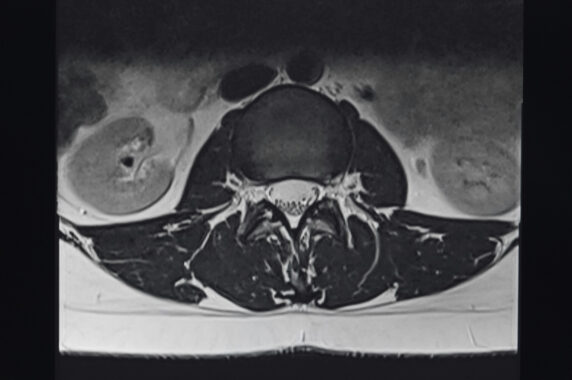


Neurosurgery specialist Mr Nick Todd and colleagues dispel some common myths about cauda equina syndrome (CES) and highlight some under-recognised facts about the condition
MYTHS
Myth 1. There is a standard presentation of CES
There is no standard or typical clinical presentation of CES. It is a syndrome of different symptoms and signs, not all of which have to be present to make a clinical diagnosis of suspected CES. Any symptom or sign, or any combination, can be found in an individual patient. Symptoms and signs vary considerably, as does the severity of injury, ranging from modest cauda equina irritation to catastrophic neurological and visceral injury. Symptoms include low back pain, often severe, which is present in around 96% of cases, sciatica (in 93%), urinary retention (41%), urinary incontinence (40%), poor stream (37%), altered bladder or urethral sensation (22%), urinary frequency or urgency (9%) or bowel dysfunction (39%).1 Objective signs include saddle numbness (73%) or reduced anal tone (AT) (43%). Normal perianal sensation (PAS) is found in 32%, so this does not exclude CES. National guidance in primary care is to refer on the basis of symptoms not signs (so-called symptom-only CES).2
Myth 2. Bilateral sciatica is a key presenting feature of CES
The majority of patients have unilateral sciatica (52%).1 Where the disc prolapse is at L5/S1 there may be no features of radiculopathy (no radicular pain, numbness nor weakness), particularly if the prolapse has descended onto S1.
The emphasis on presence of bilateral sciatica, which has led to a broadly held misconception that it is always present, comes from the observation that large central disc prolapses can compress the lateral nerve roots before there are CES symptoms. As such, bilateral sciatica is a risk factor for CES, but it is not a necessary symptom. Current national guidance is to refer to an MSK service for assessment within 2 weeks where there is bilateral sciatica with no symptoms of CES.
Myth 3. CES always presents acutely
Many, typically young, CES cases caused by an acute disc prolapse do present acutely, but a chronic pattern of symptoms is common in lumbar spinal stenosis (LSS). This can cause diagnostic difficulty in general practice with an increasing prevalence of LSS in an increasingly ageing population. A clinical diagnosis of LSS is found in 11-39% of patients.3 MR imaging in primary care in patients aged ≥ 65 years demonstrates LSS in 45-60%.3
The problem is that in the elderly chronic low back pain, leg pain and urinary dysfunction are common; in primary care urinary incontinence is present in 48% of women over the age of 70 years and 14% of men.3 Symptoms and signs of CES in lumbar spinal stenosis are similar but those symptoms are more typically chronic. Where there is known radiological LSS or neurogenic claudication a new, acute, symptom of altered saddle sensation or new bladder dysfunction should prompt urgent referral.3,4 A chronic complaint of bladder dysfunction or altered saddle sensation needs careful thought. If CES symptoms progress slowly over many months a routine MRI can be justified. In LSS with chronic symptoms the speed and urgency of MRI is determined by the speed and urgency of symptoms.3,4
Myth 4. A diagnosis of CES can be made a radiologist
CES is a clinical diagnosis that is, or is not, supported by radiological findings (usually on MRI). It is not a radiological diagnosis. A radiologist can say whether there is radiological compression of the cauda equina nerve roots and, of course, its cause. A radiologist cannot comment upon neurological function nor make a diagnosis of CES. If a GP gets an MRI report that identifies cauda equina compression (terms such as ‘nerve root crowding, effacement of CSF, frank compression of the cauda equina nerve roots or severe spinal stenosis’ are common) we recommend that the patient is urgently contacted by telephone. If there are no symptoms of CES a red flag warning should be added to the notes. In the very unlikely event there are new symptoms the patients should be sent to A&E. If there are chronic symptoms of CES over weeks and months, follow your local pathway for this scenario.
Myth 5. Outcomes in CES are poor
The common symptoms in CES are low back pain, radiculopathy and bladder or bowel dysfunction. Postoperatively the severity of low back pain is typically halved.1 Radicular leg pain improves in 80-85% of cases, and often it is cured. Motor weakness can improve particularly where the preoperative weakness is modest. Lower limb sensory losses can improve but typically incompletely. In the past bladder and bowel outcomes and sexual function were often poor with long-term bladder catheters and rectal irrigation. These were features of late referral of CES patients. Current management emphasises early referral with symptom-only CES. Long-term outcomes are, and will be, better because in the absence of objective signs, symptoms typically resolve, leaving the patient with minimal long-term neurological damage.
FACTS
Fact 1. Rectal examination is not required to make an urgent referral
Since 2020 there have been three sets of national guidelines that have recommended a change in the assessment and referral of suspected CES cases in primary care.2,5,6 Symptoms of CES mandate an urgent MRI even in the absence of objective signs. Rectal examination as part of CES assessment should not be performed in primary care; objective signs are not required , and might lull the GP into a false sense of security – a GP cannot exclude CES in a patient with relevant symptoms by examining them. Immediate referral to hospital is needed if there are symptoms of CES. In primary care history-taking to elicit any symptom of CES is mandated.
Fact 2. Any symptoms of CES should prompt urgent referral for MRI
Any symptom of CES, however subtle, should prompt referral for an MRI. Bladder symptoms include any new change in urinary frequency, hesitancy, dribbling, incomplete emptying, loss of the sensation of bladder fullness or of passing urine, retention or incontinence (emphasising that painless urinary incontinence is a late feature of, often irreversible, CES). Altered saddle sensation includes a subjective complaint of numbness or paraesthesia in the genitalia or around the anus. Ask about reduced sensation on wiping at the toilet; this is very similar to a formal examination of PAS. An urgent MRI is mandated for any CES symptoms regardless of PAS/AT.2 The most recent NICE Clinical Knowledge Summary on sciatica emphasises the difference between early and late symptoms of CES.5 Early symptoms include difficulty in initiating micturition or an impaired sensation of urinary flow compared to late symptoms which include potentially irreversible urinary retention with overflow urinary incontinence. Whilst early symptoms are usually reversible late symptoms are often irreversible.
Fact 3. Know your local CES pathway
In primary care a patient with low back pain, sciatica or neurogenic claudication should be assessed to establish (i) are there any new bladder problems and (ii) is there any change in saddle sensation subjectively? Referral to the secondary service is by local arrangement most commonly to orthopaedic surgery or A&E. Neurosurgeons will not accept a suspected CES case without a positive MRI. The authors have found that hospital doctors are not as familiar with the new national guidelines as they should be. If an orthopaedic registrar refuses to accept a patient the best course of action would be to send the patient to A&E. GPs cannot accept no for an answer to such referrals and they are too busy to argue or telephone the Consultant.
Fact 4. MRI is the ideal imaging modality to support CES diagnosis
The ideal imaging is magnetic resonance imaging (MRI) provided there is no contraindication (metal fragments in the eye, cardiac pacemakers/ICD or spinal cord stimulators). The alternative is CT myelography. The MRI should be performed in secondary care within 4 hours of the request by the hospital doctor; only a small percentage will be positive. The commonest cause is a large central disc prolapse (typically a disc prolapse occupying >50% of the spinal canal) but there are many other causes including benign and malignant tumours, infection, a haematoma in those who are anticoagulated and osteoporotic fractures. Referral to a spinal service will follow and typically surgery is performed as an emergency to prevent further neurological deterioration. In the distant past spinal surgeons would not operate on CES patients in the absence of objective signs. Since 2019 it has been standard practice for spinal surgeons to operate on symptom-only CES, not waiting for the development of objective signs.1 Early diagnosis and treatment of CES is typically associated with good outcomes because more severe and/or irreversible neurological injury is prevented.
Fact 5. Always document that early symptoms have been assessed
Litigation is common in CES cases. Current national guidelines mandate that questions about early symptoms of CES are asked. In the past it was common for GPs to write ‘no red flags’ or ‘no incontinence/saddle anaesthesia’. This is not sufficient. If the case is assessed later, for medicolegal purposes, it will be of great assistance to the GP to be able to demonstrate that they asked about early symptoms which included any change in bladder function and any change in saddle sensation. If a GP records that they have asked about any change in bladder function and any change in subjective saddle sensation this shows that they have considered early CES and excluded it.
Mr Nick Todd is consultant neurosurgeon and spinal surgeon at Newcastle Nuffield Hospital, Dr Nick Kearsley is a GP in Sheffield and Alexander Wright-Todd is a medical student at University of Newcastle upon Tyne
References
- Woodfield J et al. Presentation, management, and outcomes of cauda equina syndrome up to one year after surgery, using clinician and participant reporting: a multi-centre prospective cohort study. Lancet Reg Health Eur 2022;17:24:100545
- NHS England. Getting it Right First Time (GIRFT). National suspected cauda equina pathway. Last updated March 2026
- Comer C et al. Shades of grey – the challenge of ‘grumbling’ cauda equina symptoms in older adults with lumbar spinal stenosis. Musculoskelet Sci Pract 2020;4:102049
- Todd N et al. Assessment of cauda equina syndrome: new national guidelines and implications for primary care. Br J Gen Pr 2025;75(757):381-3
- NICE. CKS. Sciatica (lumbar radiculopathy). Red flag symptoms and signs. Last revised 2025
- National Spine Network. National back pain and radicular pain pathway. 2020 (updated 2022).
Visit Pulse Reference for details on 140 symptoms, including easily searchable symptoms and categories, offering you a free platform to check symptoms and receive potential diagnoses during consultations.
Related Articles

READERS' COMMENTS [3]
Please note, only GPs are permitted to add comments to articles







I read with interest the article by Todd et al. on cauda equina syndrome (CES), which appropriately highlights the variability of presentation and the importance of early symptom recognition in primary care. However, I would like to raise a practical concern regarding the recommendation that any symptom suggestive of CES should prompt urgent MRI.
In current NHS practice, general practitioners do not have direct or time-guaranteed access to emergency MRI for suspected CES. Referral pathways are locally variable and commonly require secondary care triage or emergency department attendance. As such, the term “urgent MRI” does not correspond to a predictable timeframe when initiated from primary care, and there is often no reliable mechanism to anticipate imaging delay at the point of referral.
Given that CES is a time-critical neurosurgical emergency, uncertainty in time-to-imaging is clinically significant. The safest and most consistent pathway for suspected CES is therefore hospital-based assessment, where urgent neurological examination, MRI access, and spinal surgical input can be delivered within an integrated emergency system.
While I fully support prompt recognition of CES symptoms and avoidance of false reassurance from normal examination findings, guidance should more clearly reflect the operational reality that definitive imaging and escalation are not directly controllable from primary care.
In practice, suspected CES is best managed as an immediate hospital referral rather than an outpatient MRI request pathway.
Typical hospital view because they are looking at a different population, as well as showing us the intersting outliers. The expectation from them is that any back sympton now gets an MRI? That will clog up the system nicely. They are moving from a clinical diagnosis of CES to an MRI one. Since most of us will not have “normal” MRI scans especially in the elderly, heaven knows what damage will ensue. This repeats the nonsense we has when Multiple Sclerosis went from a clinical diagnosis (dissemintated in time and space) to a MRI diagnosis resulting in failed trial treatments, treating the scan not the patient. The hospital doctors went go full circle and invented “Radiologically isolated Syndrome” (RIS).. thus waiting for any symptoms to dissemintate in time and space as we did before scans, We did it without terryfying the patients and ruining their life insurance. Early Detection always seems to work because some were never going to progress, and lead time makes the stats look even better.
I think ‘Urgent MRI’ means within about 6-8 weeks, as opposed to routine, but what is meant here is actually ’emergency MRI’, especially given our nearest MRI machine migh be 3-4 hours travel from the GP surgery by patient transport, much further by public transport! I am not sure of current ambulance arrival timings, but I believe this is NOT, for ambulance, a life-threatening matter, so is not TOP response priority.