

One-off MenB vaccine programme announced for Year 13 and university starters
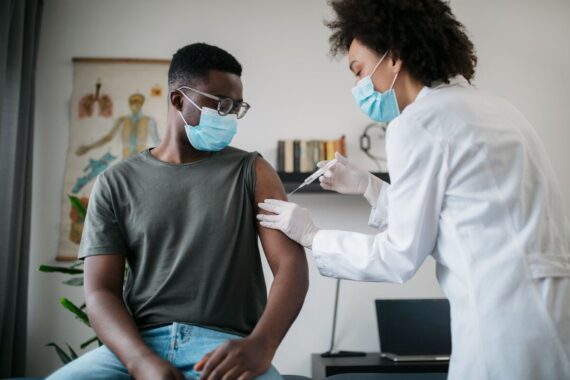


The Government has announced a one-off MenB vaccination programme for all Year 13 pupils as well as those under 25 years who are starting university or residential further education for the first time this autumn.
Two doses will be offered – in July and August – through community pharmacies, the UK Health Security Agency (UKHSA) has announced.
Year 13 students will be contacted by the NHS directly and sent a link to book an appointment. Others who are eligible will be able to book through the NHS website or attend walk-in sessions.
It comes after an outbreak of meningococcal B disease in Kent earlier this year which was the fastest growing and largest ever seen in the UK and led to the deaths of two teenagers.
There have also been more clusters than normal this year, some of which have been bigger than expected, officials said.
The most likely reason for the clusters is lower levels of immunity among young people, experts believe.
UKHSA has estimated that the relative risk of invasive MenB disease in first year university students is substantially greater than in their peers.
Cases tend to peak in October to November each year and the vaccination programme will help protect those at highest immediate risk of serious illness as they move into shared accommodation, the Agency said.
Figures show there were 313 confirmed cases of Meningococcal Group B (MenB) in England during 2024/25, which accounts for approximately 83% of all invasive meningococcal disease (IMD) cases.
The disease disproportionately affects young adults and teenagers, as well as infants who are already offered the vaccine through the NHS schedule.
International students under 25 entering their first year of university, should receive their first dose in their home country where possible, UKHSA said.
The one-off vaccination programme will help to protect those at highest immediate risk while the government monitors and assesses new evidence to determine whether there has been a change in the spread of MenB.
After the Kent outbreak, the Government asked the Joint Committee on Vaccination and Immunisation (JCVI) to review the need for vaccination in teenagers and young adults – further information on whether a longer-term programme is needed will follow.
Health secretary James Murray said: ‘The Kent outbreak and recent clusters indicate a possible change to the way MenB affects people.
‘While we assess the latest evidence, we are acting now to help protect young people at highest immediate risk as they enter university and residential colleges this autumn.
‘By offering a two-doses of the jabs ahead of the academic year, we will help reduce the risk of serious illness and larger outbreaks of this horrendous disease.’
Those eligible for the one-off programme include those who complete year 13 of education in the summer of 2026 born between 1st September 2007 and 31st August 2008 irrespective of their future education plans.
It will also include those under 25-years old starting university or moving into some residential further education settings for the first time in autumn 2026.
Evidence from the UK infant vaccination programme shows it is associated with a 75% reduction in MenB disease among eligible vaccinated groups.
Dr Shamez Ladhani, consultant epidemiologist at UKHSA, said: ‘While MenB outbreaks are uncommon, when they occur, they can be devastating as recent outbreaks have sadly shown.
‘Two doses of the MenB vaccine is essential and will give good protection against most strains and help to give young people and their families some reassurance.’
Visit Pulse Reference for details on 140 symptoms, including easily searchable symptoms and categories, offering you a free platform to check symptoms and receive potential diagnoses during consultations.
Related Articles

 What do people really know about rare diseases?
READERS' COMMENTS [1]
Please note, only GPs are permitted to add comments to articles







So odd that it is offered to pharmacies and not GP surgeries.