UK regulator approves first lower-carbon asthma inhaler
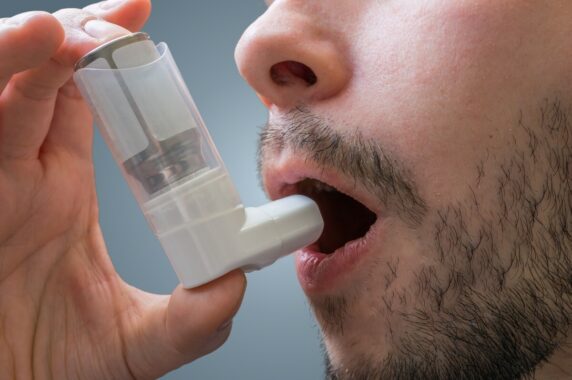


The UK medicines’ regulator has approved the world’s first pressurised metered-dose inhaler for asthma with a ‘minimal carbon footprint’.
The Medicines and Healthcare products Regulatory Agency (MHRA) has approved new versions of Clenil Modulite 100 micrograms inhaler and Clenil Modulite 200 micrograms inhaler.
Both contain the same active ingredient – beclometasone dipropionate – as the old version but they use HFA-152a as a propellant which has lower ‘global-warming potential’ than that used traditionally.
Chiesi, who manufactures the inhalers for use in adults and children, said the move will reduce their inhaler carbon footprint by up to 90%.
Pressurised-metered dose inhalers (pMDIs) are widely used in the UK and account for 3% of the NHS total carbon footprint.
The new minimal carbon alternatives will be available in the UK later this year, the MHRA said.
It follows studies showing therapeutic equivalence and tolerability compared with inhalers using HFA-134a.
Professor Dave Singh, professor of clinical pharmacology and respiratory medicine at the University of Manchester, said the approval of the inhalers ‘represents a significant step forward in sustainable respiratory care’.
He said the evidence shows they work in the same way, so patients can maintain access to the treatment that works for them while the carbon footprint of these pMDIs is addressed in the background.
Julian Beach, MHRA executive director of healthcare quality and access, said: ‘This approval marks the world’s first authorisation of an inhaler using the next-generation propellant HFA-152a.
‘It demonstrates how innovation can support both patient care and environmental sustainability while maintaining the high standards of quality, safety and effectiveness patients expect.
‘As with all medicines, we will continue to monitor its safety and effectiveness closely.’
He stressed that no changes have been made to the active ingredient, recommended doses or therapeutic indications.
He said the MHRA approval was supported by evidence which demonstrates that the new formulations perform comparably to the currently authorised products while maintaining the same quality, safety, and clinical benefit.
A study published by Asthma+Lung UK found a third of patients report worse asthma control after an inhaler switch.
Moving to a new inhaler includes to improve their asthma control or alleviate symptoms but also for environmental reasons, which could include switching to a dry-powder inhaler, the survey found.
Poorly controlled asthma is contributing to more than 300,000 tons of greenhouse gas emissions in the UK every year, a 2024 analysis suggested. Most of the carbon footprint comes from over-reliance on reliever inhalers, the study published in Thorax and carried out by Astra Zeneca found.
However, respiratory experts have warned GPs against blanket switches to powder inhalers because it risks damaging patient relationships and disease control.
Visit Pulse Reference for details on 140 symptoms, including easily searchable symptoms and categories, offering you a free platform to check symptoms and receive potential diagnoses during consultations.