
General practice ‘plan B’ ballot will be open to all GPs with consultation to launch in summer
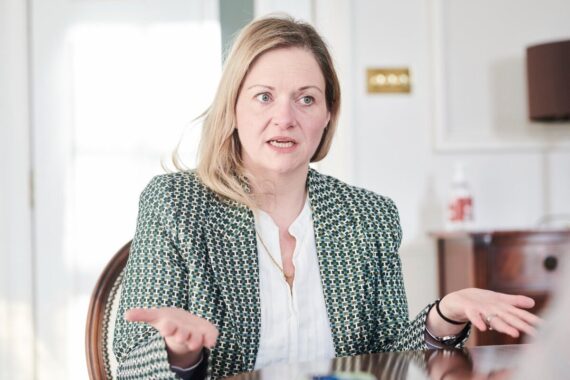


Exclusive The BMA is going to ballot all GPs, not just GP partners, on a ‘plan B’ for general practice, and is planning an ‘extensive consultation’ on this over the summer, its GP committee chair has said.
Salaried GPs, locums, registrars, retainers and partners will all be balloted on an alternative model of delivering general practice in England, Dr Bramall told the audience at Pulse LIVE in Birmingham.
It comes after the union confirmed that it will ballot GPs on an ‘alternative strategy’ for general practice that would allow GPs ‘greater freedom to provide private services to their patients’, with the ballot happening as soon as later this month.
GP leaders from around the UK voted in favour of drawing up a strategy for ‘exiting GMS contracts’ and ‘future working outside the NHS’, at UK LMC conference last month.
On whether GPs will be balloted on a model similar to dentistry, Dr Bramall said: ‘It’s tricky because I know that the motion [at the LMC conference] said “like NHS dentistry”, but actually I don’t think that’s what we’re talking about.
‘We are going to ballot all GPs on a plan B, so not just contractors, but also salaried GPs, locums, registrars, retainers, to allow GPs greater freedom to provide private services for their patients.
‘Now, this was also something that we put to Wes Streeting in this year’s contract round of negotiations, which is “why won’t you allow practices that want to offer non-GMS services outside of core contract hours?”
‘Because actually, if the issue is access or various things, there’s no reason why you couldn’t do that. But it was an absolute flat no from the government, they just would not entertain the idea.’
She said that the new model ‘would not replace GMS’ but it ‘would sit alongside GMS’, adding: ‘I think we’re going to extend an extensive consultation across the summer, it’s about the future viability of all of our livelihoods.
‘I think it’s about the repeated warnings of what’s happening to general practice being ignored. It’s exploring alternative models, that’s basically a consequence of the long-term political and economic failures. It’s not necessary because government could stop it if it appropriately resourced general practice.
A House of Commons early day motion was tabled last week on the ‘future of GP services in England’, noting the decision from the BMA to go ahead with a ballot.
Early day motions are used to put on record the views of individual MPs or to draw attention to specific campaigns, and are submitted for debate in the House of Commons at an unspecified date.
The motion noted the ‘profound impact this would have on the health of people in England’ and on the functioning of the economy and called on the Government to ‘address the concerns of GPs’ and ensure the future of general practice in England ‘as a comprehensive service available to all free at the point of need’.
Speaking about the early day motion, Dr Bramall said: ‘They’re not attacking us for this, they’re saying “why aren’t we listening to general practice?” and saying we’re running out of time, so that’s going to be really positive, if we can get an early day motion before Parliament goes into recess around the middle of July, then we could get some real traction with this, and that’s part of it.’
It comes as the committee is currently coordinating GP collective action against this year’s imposed GP contract, with practices being asked this month to begin the next phase by removing or ignoring any non-contractual medicines optimisation software for new prescriptions.
When asked about the take-up of these actions, Dr Bramall said: ‘I’m pretty much reliant on the members of the GPC England committee to come back from their regional constituencies, having undertaken surveys.
‘So I know what it is in Cambridgeshire and Peterborough, because that’s my patch. I’ve got a good feel for Bedfordshire and Hertfordshire, because we share a system, but we’re going to be hopefully asking for data returns from reps in the next couple of weeks. Informally it’s well over 50%. In some areas, it’s about 70-80% which is really good.’
The Government previously said that it does not believe general practice should be moving towards a private model and wants to work with GPs to ‘build a sustainable future’.
For more from Dr Bramall’s Pulse LIVE Birmingham interview, listen to the Pulse in Focus podcast: How should GPs manage metabolic syndrome; and how is AI changing the complaints system?
Pulse will be back in Birmingham 21-22 June for the Community Pharmacy and General Practice Conference, co-hosted by Cogora. GPs can sign up to attend for free here.
Related Articles

READERS' COMMENTS [5]
Please note, only GPs are permitted to add comments to articles






If GPs want to lose the respect and trust of their patients then vote for this. Otherwise stand in the shoes of those who struggle, who need a person they trust and a team that delivers good face-to-face care- it’s not dentists now and it won’t be GPs in the future. Whatever way you spin this it is naked greed and doctors will be rightly despised for destroying our NHS.
Its not docotrs who are destroying NHS, Its politicians who are ignoring repeated pleas from GP leaders are destroying NHS by not funding it properly. We are the only efficient part of NHS but still we are being squeezed just because we are not united. We need to stop our obsession of being saviour of NHS .
We are provider of the services . We provide services and get paid for that. Governtment currenlty pays for Fiat quality services and expect Rolls Royce quality serivces. Its not going to happen. Gp are developing spine now and had enough of Politicians exploitng our goodwill. If consultants are allowed to work privately , why GPs are not allowed to provide private services beyond contractual hours?
I think this is positive and hope it is well supported. We have to move forward and not remain dogmatically wedded to an outdated system, no longer commensurate with the overriding values of society.
Dont know how they ballot, but ive never been sent anything?
You are Jim Mackey and I claim my £5